

Discover how reviewing vendor invoices, service agreements, and commercial facility maintenance expenses can help multi-location businesses identify hidden costs and potential savings.
When a business operates across multiple locations, facility service expenses rarely sit neatly in one budget. Each site may have its own contractors, invoices, service agreements, and renewal dates, making it difficult for Finance teams to determine whether the business is paying competitive rates or carrying expenses that no longer reflect its needs.
Fragmented vendor relationships, unchallenged emergency fees, duplicate charges, and automatic contract renewals can quietly increase spending across a multi-location portfolio. A structured review of commercial facility maintenance can help businesses identify discrepancies that individual site-level reviews may miss and determine where facility maintenance costs no longer align with contracted rates or operational needs.
For multi-location businesses, the priority is to verify vendor charges, review contract terms, and ensure services still match operational needs, not to cut essential work indiscriminately. Finance, Procurement, and Operations teams can use a structured commercial facility maintenance review to identify discrepancies that warrant further investigation.
This article explores six facility service costs that multi-location businesses may overlook, along with practical ways to review vendor invoices, service agreements, and work orders. The aim is to identify potential discrepancies in commercial facility maintenance spending and determine whether the costs reflect each location’s actual requirements, without compromising essential services.
- Unapproved additional work and out-of-scope charges
- After-hours and emergency call-out premiums
- Duplicate service invoices and repeated line items
- Repeat commercial facility maintenance service visits and recurring repair charges
- Automatic contract renewals and unnoticed price escalations
- Unnecessary services and misaligned contract scopes
What factors affect facility maintenance costs?
Commercial facility maintenance expenses depend on building age and condition, site size, equipment, service frequency, labor and material rates, emergency work, and the number of locations managed. Comparing these factors helps businesses interpret facility maintenance costs fairly across sites with different operating needs.
1. Unapproved Additional Work and Out-of-Scope Charges

What it is
Commercial facility maintenance invoices may include charges for additional work, materials, or services that were not clearly authorized or included in the original agreement. These costs can arise when vendors perform extra work without documented approval, apply charges outside the agreed service scope, or bill for tasks that have not been adequately substantiated.
Across multiple locations, different approval processes and service agreements can make these facility maintenance costs difficult to track. Without clear records of the agreed scope, authorized work, and applicable rates, businesses may struggle to determine whether additional charges are valid or require clarification.
Why it matters
- Unapproved work increases spending: Additional work performed without the required approval can add charges to facility maintenance costs that were not included in the original agreement or approved work order.
- Out-of-scope charges go unnoticed: Vendors may bill for additional services, materials, or tasks beyond the agreed scope. Without comparing invoices against the contract and work orders, businesses may overlook charges that require clarification or approval.
- Approval records become harder to track: Different approval procedures across locations can make it difficult to maintain a consistent record of who authorized additional work, what was approved, and which charges were accepted.
- Billing disputes become harder to resolve: Without documented approvals, work orders, and supporting invoices, businesses may struggle to establish whether additional work was requested, completed, and billed at the agreed rate.
Pro Tip: Require vendors to document additional work and obtain approval before performing non-emergency services outside the agreed scope. Compare each invoice with the commercial facility maintenance agreement, relevant work order, and approval record. Verify that the work was authorized, completed, and billed at the agreed rate before processing payment.
2. After-Hours and Emergency Call-Out Premiums
What it is
When a plumbing failure, electrical fault, or HVAC breakdown disrupts operations, a business may need repairs outside normal working hours. Depending on the vendor agreement, these visits can trigger premium labor rates, emergency dispatch fees, minimum call-out charges, travel fees, and markups on replacement parts. These facility maintenance costs should be identifiable in the vendor’s rate schedule or itemized invoice.
Emergency work is sometimes unavoidable, particularly when an issue threatens safety, damages property, or interrupts essential operations. The cost concern arises when businesses lack visibility into applicable rates or fail to verify whether charges match their agreements. Across several locations, inconsistent pricing terms can make commercial facility maintenance spending less predictable.
Why it matters
- Premium rates increase repair bills: After-hours labor rates and emergency dispatch fees can increase facility maintenance costs when they are not checked against agreed pricing.
- Pricing varies between vendors: Minimum call-out charges and travel fees can add to the cost of a single service visit.
- Additional charges escape scrutiny: Dispatch fees, minimum billable hours, and parts markups can receive limited attention when teams prioritize restoring operations.
- Budgets become less predictable: Repeated emergency call-outs can complicate forecasting and obscure the underlying drivers of facility maintenance costs.
- Contractual protections may be overlooked: Businesses may miss opportunities to question charges that differ from agreed rates or approval requirements.
Pro Tip: Review emergency invoices against the relevant vendor agreement and work order. Check standard and after-hours labor rates, dispatch fees, minimum billing periods, travel charges, and parts markups against the agreed pricing. During commercial facility maintenance contract negotiations, seek clearly defined emergency pricing and practical approval thresholds without delaying urgent work. Compare charges across locations to identify unusual pricing patterns and determine which facility maintenance costs merit closer scrutiny.
3. Duplicate Service Invoices and Repeated Line Items
What it is
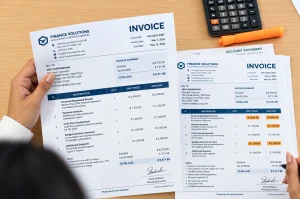
When locations use separate contractors and accounts payable workflows, invoice controls can become inconsistent. A vendor might submit the same invoice to both a local site and corporate Finance, or an invoice might contain a repeated line item that goes unnoticed during approval.
Not every repeated commercial facility maintenance charge is an error: separate invoices may legitimately cover different visits or completed work. The key is determining whether the same invoice or service line item has already been submitted or paid. Without consistent invoice and payment records, duplicate charges can be difficult to identify across a multi-location business.
Why it matters
- Duplicate payments drain budgets: Identical invoices processed through separate workflows can result in unnecessary payments.
- Repeated line items create unnecessary payments: The same service charge may appear more than once across invoices or payment workflows.
- Previously processed invoices may be resubmitted: Separate site-level and corporate accounts payable workflows can make it difficult to identify invoices that have already been submitted or paid.
- Spending becomes less transparent: Fragmented records make it harder to reconcile facility maintenance costs against contracts, budgets, and completed work.
- Small discrepancies accumulate: Repeated overcharges across several locations can add up to a meaningful expense over time.
- Billing disputes become harder to resolve: Missing invoices, contracts, or work orders can make it difficult to substantiate a challenge or request a correction.
Pro Tip: Introduce invoice-level checks for duplicate invoice numbers, matching amounts, repeated line items, and invoices that may already have been processed. Reconcile vendor invoices against accounts payable and payment records. A consistent commercial facility maintenance review process helps teams identify potential duplicate payments before they occur and investigate the costs that warrant further review.
4. Repeat Commercial Facility Maintenance Service Visits and Recurring Repair Charges

What it is
Repeated service visits can increase commercial facility maintenance spending when the same issue recurs or a contractor has to return because the original repair was incomplete. Businesses may incur additional diagnostic fees, labor charges, replacement-part costs, or follow-up visit fees. Reviewing the original work order and service records can help establish whether the return visit involved a new fault, unfinished work, or a repair that should have been covered by a warranty or service-level obligation.
A repeat visit does not automatically indicate unnecessary spending. A new fault or additional work may justify another invoice. However, businesses should check whether the original repair was completed, whether the same issue has returned, and whether the agreement includes warranty or service-level coverage for follow-up work. Fragmented service histories can make it difficult to determine whether a repeat charge is appropriate or requires clarification.
Why it matters
- Repeated fees go unexamined: Diagnostic and follow-up charges may recur without comparison against previous visits and completed work, increasing facility maintenance costs.
- Warranty coverage may be missed: Certain repairs or replacement parts may qualify for warranty protection or a workmanship guarantee.
- Service patterns remain hidden: Incomplete records make it harder to compare recurring problems, repair outcomes, and vendor charges across locations.
- Contract responsibilities remain unclear: Businesses may miss opportunities to clarify which callbacks, corrective repairs, or follow-up visits are included in the original agreement.
Pro Tip: Maintain a shared service history linking invoices to the location, equipment or asset identifier, work order, repair date, and warranty terms. Before approving another charge for a recurring issue, check whether the original work was completed, whether the same fault has returned, and whether the follow-up visit falls under an existing warranty or service-level obligation. Reviewing commercial facility maintenance invoices alongside service records can help distinguish legitimate expenses from charges that need clarification.
What is the difference between preventive and reactive maintenance?
Preventive commercial facility maintenance involves scheduled inspections and servicing to address potential issues before failure, while reactive maintenance responds after something breaks. A balanced facility maintenance plan uses appropriate preventive work to limit avoidable emergencies while tracking expenses and preserving essential service coverage.
5. Automatic Contract Renewals and Unnoticed Price Escalations
What it is
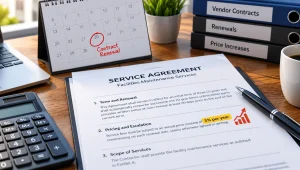
Facility service agreements may include automatic renewals, annual price increases, minimum commitments, and advance notice requirements. Missing a cancellation or renegotiation window can leave businesses committed to terms that no longer reflect current pricing or operational needs, while hidden contract fees may add to the expense.
Reviewing commercial facility maintenance contracts ahead of these deadlines gives Finance and Procurement teams time to assess costs, compare applicable pricing terms, and negotiate appropriate changes.
The risk becomes harder to manage across multiple locations, where contracts may have different renewal dates, pricing structures, and escalation clauses. Even modest increases across several agreements can compound over time, particularly when businesses do not compare current rates with relevant market benchmarks before renewing.
Why it matters
- Price increases go unchallenged: Annual escalators can raise recurring expenses without a review of market rates or contract performance.
- Renewal deadlines are missed: Notice periods may expire before Finance or Procurement has time to evaluate alternatives or negotiate revised terms.
- Outdated terms remain in force: Contracts may no longer reflect current location requirements, purchasing volumes, or service expectations.
- Costs rise incrementally: Increases across multiple agreements can place additional pressure on facility maintenance costs and operating budgets.
- Negotiating opportunities disappear: Businesses may renew without comparing equivalent services, reviewing local benchmarks, or requesting updated proposals.
Pro Tip: Create a centralized contract calendar that records renewal dates, escalation clauses, cancellation deadlines, and notice requirements. Review agreements well before each deadline, compare current rates against relevant local market benchmarks, and assess whether the contracted scope still reflects actual needs. A structured commercial facility maintenance contract review gives businesses time to negotiate pricing and identify the facility maintenance costs that may be addressed through revised terms.
What multi-location businesses should review before their next facility contract renewal?
Before renewing, compare contract rates with market benchmarks, check escalation clauses and notice periods, review additional fees and minimum commitments, verify service scope, and investigate invoice discrepancies. Comparing commercial facility maintenance pricing and costs across locations can reveal negotiation opportunities.
6. Unnecessary Services and Misaligned Contract Scopes
What it is
Facility service agreements can continue reflecting past operating conditions long after a business changes how its locations are used. A site may reduce its operating hours, change occupancy, reconfigure its space, or adjust its production schedule while the original service frequency and coverage remain unchanged. As a result, businesses may continue paying for contracted services that no longer reflect their current operational requirements.
For example, a business might continue paying for cleaning visits that exceed current requirements, overlapping services from different contractors, or maintenance coverage that no longer matches a site’s needs. Reviewing the contracted scope against actual site requirements can help identify commercial facility maintenance services that may need adjustment. The objective is not to cut essential services indiscriminately, but to ensure that contracted work remains appropriate for each facility and its operational requirements.
Why it matters
- Unused services continue to be billed: Businesses may pay for visits or coverage that no longer reflect actual requirements.
- Contracts overlap: Different providers may perform similar responsibilities without a clear division of work, creating avoidable expenses.
- Spending no longer matches demand: Changes in occupancy, operating hours, or facility usage may not be reflected in service frequency or pricing.
- Renegotiation opportunities are overlooked: Reviewing scope and frequency can reveal opportunities to adjust agreements without compromising safety, cleanliness, or operational continuity.
Real-world example
Midland Farms, Inc., a dairy processing and distribution company, partnered with The SALT Group to review its waste services and identified an opportunity to align hauling frequency with the volume of waste handled. The review found that the company could manage more tonnage with fewer hauls. Although this example relates to waste services rather than commercial facility maintenance, it illustrates why businesses should assess whether contracted service frequency reflects actual operational requirements rather than continuing with arrangements that may no longer be necessary.
Pro Tip: Compare each location’s contracted services against its current operating requirements. Identify redundant coverage, unnecessary service frequencies, and differences in scope between comparable facilities. Ask vendors to provide itemized pricing for alternative service levels, then assess the proposed changes against operational needs and applicable obligations. This commercial facility maintenance review can help businesses negotiate more appropriate agreements and identify the expenses that no longer reflect the services each location needs.
How to identify hidden commercial facility maintenance expenses across locations?
Identify hidden commercial facility maintenance expenses by consolidating vendor records, comparing equivalent service rates, checking invoices against contracts and work orders, reviewing renewal terms, and investigating discrepancies. Comparing spending across locations helps businesses prioritize potential savings and determine which facility maintenance costs warrant further review.
Reduce Commercial Facility Maintenance Costs Before They Accumulate
Overlooked expenses can add up across a multi-location business, but not every discrepancy represents an overpayment or a worthwhile savings opportunity. A structured review of commercial facility maintenance helps businesses assess which issues deserve attention first.
For example, a hypothetical $100 monthly discrepancy would total $1,200 annually at one site, or $12,000 across ten sites if the same discrepancy occurred at each.
To prioritize potential savings from facility maintenance costs:
- Assess the financial impact: Estimate the annual value of a recurring discrepancy before deciding how urgently to investigate it.
- Validate the supporting evidence: Confirm that the amount in question is inconsistent with the relevant agreement, documented work, or approved pricing.
- Consider operational implications: Determine whether a proposed change could affect essential services, site requirements, or business continuity.
- Prioritize substantiated opportunities: Focus review efforts on discrepancies with clear documentation and a reasonable basis for further investigation.
This approach helps businesses evaluate commercial facility maintenance costs systematically and direct attention toward opportunities that merit closer review, without assuming every variance can be eliminated.
Take Control of Commercial Facility Maintenance Spending
Managing commercial facility maintenance costs effectively starts with understanding where facility vendor spending occurs across locations. Consolidated vendor records and consistent invoice reviews can reveal pricing discrepancies, recurring charges, and potential savings opportunities. However, each discrepancy requires validation against contracts, work orders, and service records before determining whether it represents an overpayment or a legitimate expense.
Reviewing facility service agreements across multiple locations can require significant time and specialized expertise, which is why some businesses work with spend management consultants. The SALT Group reviews commercial facility maintenance contracts, invoices, service scopes, and pricing terms to identify potential overcharges and negotiation opportunities. Its consultants use category-specific expertise and localized benchmarks to assess whether charges align with contractual terms, market conditions, and the services provided.
Its consultants support negotiations for improved pricing and contract terms while managing the review process with minimal internal effort from Finance and Procurement teams. The SALT Group also provides dedicated client support throughout the review and negotiation process.
Identify defensible expense-reduction opportunities while preserving the services businesses need with The SALT Group.
FAQs
1. How can I tell if my facility maintenance costs are higher than they should be?
Compare equivalent service prices across locations and against relevant local market benchmarks. Review contracted rates, annual increases, emergency charges, markups, and service scopes. Validate discrepancies against agreements and completed work before determining whether they represent potential overpayments in commercial facility maintenance expenses.
2. How can I identify hidden charges across multiple facility locations?
Consolidate vendor invoices, contracts, and work orders across locations. Check for duplicate invoice numbers, repeated line items, charges that do not match agreed rates, emergency fees, and unexplained price increases. Comparing facility maintenance costs across locations can reveal recurring billing patterns that individual invoice reviews may miss.
3. How can I reduce commercial facility maintenance expenses without compromising service quality?
Review emergency rate schedules, compare equivalent vendor proposals, investigate recurring repair charges, and reassess service frequencies against each location’s needs. Preserve essential maintenance, safety requirements, and operational coverage. Negotiate appropriate pricing and service scopes rather than choosing the cheapest provider or cutting necessary work.
4. How can I review facility maintenance costs without overburdening my finance team?
Standardize invoice collection, maintain a central contract calendar, and prioritize reviews by potential financial impact and supporting evidence. Specialist expense-reduction consultants can provide category-specific expertise, localized benchmarks, and negotiation support. The SALT Group manages much of the vendor expense review and negotiation process, helping Finance and Procurement teams review commercial facility maintenance costs with minimal internal effort.
Review Your Commercial Facility Maintenance Spending
- Compare costs across locations: Review comparable services and pricing across sites to identify discrepancies that warrant further investigation.
- Prioritize review opportunities: Assess potential discrepancies based on their financial impact, supporting evidence, and operational implications.
- Protect essential services: Ensure any proposed changes reflect actual site requirements and do not compromise operational needs.
Ready to review your facility maintenance costs? Discuss a facility expense review with The SALT Group to explore potential cost-saving opportunities.