

A Practical Guide to Identifying Duplicate Payments, Tax Overpayments, and Invoice Processing Errors That Drain Profitability
Keep reading to uncover where manual invoicing is silently draining your margins.
One wrong invoice entry can silently drain thousands of dollars from a business before anyone even notices.
According to APQC, more than 60% of invoice errors stem from manual data entry, making human-dependent invoicing processes one of the most common sources of financial leakage. But the real cost of manual invoicing isn’t usually a single mistake; it’s the accumulation of hundreds of small errors spread across thousands of transactions.
Duplicate payments, missed tax exemptions, incorrect vendor charges, and approval bottlenecks often go undetected because they appear insignificant in isolation. Over time, however, these invoice processing errors can create substantial financial leakage, reduce cash flow, and increase administrative costs across accounts payable operations.
Despite advances in finance technology, many organizations still rely on spreadsheets, email approvals, and disconnected systems to manage invoicing. While payments may be processed on time, manual invoice processing workflows often lack the visibility and controls needed to consistently prevent errors, identify overpayments, and capture sales tax refund opportunities.
The challenge is that most accounts payable teams are focused on keeping invoices moving, leaving little time to investigate billing discrepancies, validate tax treatment, or uncover hidden overpayments. As a result, financial leakage can continue for months or even years before it is discovered.
The good news is that these issues are often recoverable. With stronger controls, better visibility, and proactive invoice reviews, businesses can reduce invoice processing errors, improve accounts payable efficiency, identify sales tax refund opportunities, and recover lost dollars before they impact profitability.
What causes accounts payable discrepancies?
Accounts payable discrepancies typically result from manual invoice processing, duplicate invoices, vendor billing errors, incorrect tax treatment, and inconsistent approval workflows. While individual mistakes may appear minor, they can accumulate across thousands of transactions, creating hidden costs that reduce profitability and cash flow.
The Hidden Costs of Manual Invoicing in Accounts Payable
This guide explores seven costly manual invoicing mistakes and how businesses can address them before they impact profitability.
- Duplicate payments across departments
- Sales tax overpayments from missed exemptions
- Vendor billing errors in invoice approvals
- Human Errors and Inaccuracy
- Delayed detection of overbilling and leakage
- Inefficient accounts payable workflows
- High Labor and Administrative Costs
Duplicate Payments Across Departments
What it is
Duplicate payments occur when the same invoice is processed and paid more than once, often because different departments, locations, or systems are not connected. In many organizations, accounts payable teams rely on manual invoice processing matching, which increases the likelihood of overlap. This leads to unnecessary cash outflows that can remain unnoticed for months.
Why it matters
Improving duplicate detection reduces immediate financial leakage and strengthens internal controls.
- Cash Protection: Prevents unnecessary cash loss from repeat payments by catching duplicate invoices early.
- Better Visibility: Improves visibility across invoice processing , finance and procurement systems for more accurate tracking.
- Audit Readiness: Strengthens audit readiness and compliance with cleaner, more accurate records.
- Lower Reconciliation Effort: Reduces reconciliation workload in accounts payable by minimizing duplicate corrections.
Real-life example: A manufacturing company with multiple warehouse locations unknowingly paid the same supplier invoice twice because two regional offices processed it independently. The duplication went unnoticed for six months due to siloed accounts payable systems.
Pro Tip: Review payments with the same vendor and invoice amount made within a 30-day period. This simple check can uncover duplicate payments that often slip through manual reviews.
Sales Tax Overpayments from Missed Exemptions
What it is
Sales tax overpayments occur when businesses fail to apply correct exemptions, misclassify goods, or rely on vendors who incorrectly charge tax. In many cases, accounts payable teams lack the tax expertise to validate every invoice processing transaction at scale.
Why it matters
Recovering or preventing overpaid taxes directly improves cash flow and reduces hidden financial leakage across operations.
- Reduces tax leakage: Prevents unnecessary overpayment of sales tax due to misapplied exemptions or vendor errors.
- Improves compliance: Ensures alignment with constantly changing state-specific tax laws and regulations.
- Unlocks refunds & credits: Enables recovery of missed exemptions and strengthens eligibility for a sales tax refund.
- Improves reporting accuracy: Enhances financial clarity and precision within accounts payable records.
- Captures hidden savings: Identifies overlooked sales tax refund opportunities that accumulate over time.
Real-life example: A multi-state distributor overpaid taxes on exempt resale items because vendor invoices were not consistently reviewed. Over time, this resulted in missed sales tax refund opportunities worth tens of thousands of dollars.
Pro Tip: Review exemption certificates annually for your highest-spend vendors. Missing or outdated documentation is a common cause of preventable sales tax overpayments.

Vendor Billing Errors in Invoice Approvals
What it is
Vendor billing errors occur when suppliers include incorrect charges, duplicate line items, or unauthorized fees. Manual invoice processing and accounts payable review processes often fail to detect these discrepancies due to time constraints and high invoice volume.
Why it matters
Better invoice validation helps businesses control costs, improve vendor accountability, and maintain accurate financial records.
- Prevents Overbilling: Identifies incorrect charges, duplicate line items, and unauthorized fees before payments are approved.
- Strengthens Compliance: Ensures invoices align with agreed contract terms, pricing structures, and service agreements.
- Improves Negotiating Power: Provides visibility into billing discrepancies, helping businesses negotiate more favorable vendor terms.
- Reduces Approval Errors: Minimizes downstream invoice processing errors by validating invoice details before they enter the payment cycle.
Real-life example: A logistics company discovered recurring fuel surcharge errors in vendor invoices that had been approved without verification, leading to inflated freight costs for over a year.
Pro Tip: Compare recurring invoices against contract pricing at least once a year. Small rate increases and added fees often go unnoticed during routine approvals.
Human Errors and Inaccuracy
What it is
Manual invoice processing, data entry, spreadsheet manipulation, and email-based approvals introduce human errors such as incorrect amounts, wrong vendor codes, or duplicate entries within accounts payable systems.
Why it matters
Reducing human error improves financial accuracy, operational efficiency, and confidence in your accounts payable processes.
- Prevents Costly Mistakes: Reduces data entry errors, incorrect payment amounts, and duplicate records that can lead to financial losses.
- Improves Reporting Accuracy: Ensures financial statements and accounts payable records reflect accurate and reliable information.
- Accelerates Reconciliation: Speeds up invoice matching and account reconciliation by reducing the number of errors that require correction.
- Reduces Processing Errors: Minimizes downstream invoice processing errors that can delay approvals, payments, and audits.
Real-life example: A finance clerk accidentally entered an extra zero on a vendor payment, causing a $10,000 invoice to become $100,000 before detection.
Pro Tip: Create approval alerts for unusually high invoice amounts or duplicate invoice numbers. Catching anomalies early helps prevent costly mistakes.
Delayed Detection of Overbilling and Leakage
What it is
When companies rely on periodic audits instead of real-time monitoring, overbilling and errors remain undetected for long periods. This is a common issue in manual accounts payable environments.
Why it matters
Detecting overbilling and financial leakage sooner helps businesses recover more money and prevent losses from accumulating over time.
- Prevents Ongoing Losses: Stops overbilling and payment discrepancies from quietly draining company resources month after month.
- Improves Recovery Rates: Increases the likelihood of recovering funds before vendor dispute windows or refund deadlines expire.
- Speeds Up Dispute Resolution: Enables faster identification and resolution of billing issues, reducing delays in vendor communications.
- Supports Tax Recovery: Helps identify potential sales tax refund opportunities earlier, allowing businesses to reclaim overpaid taxes more efficiently.
Real-life example: A retail chain identified freight overbilling issues only during an annual audit, resulting in delayed recovery and lost negotiation leverage with vendors.
Pro Tip: Monitor vendor spend monthly instead of relying solely on annual audits. Earlier detection increases the likelihood of recovering overcharges.

Inefficient Accounts Payable Workflows
What it is
Inefficient workflows include paper-based approvals, fragmented systems, and manual reconciliation steps within accounts payable processes that slow down invoice handling.
Why it matters
Streamlining accounts payable workflows helps organizations process invoices faster, improve visibility, and reduce unnecessary administrative burdens.
- Speeds Up Processing: Reduces the time required to review, approve, and pay invoices, improving overall efficiency.
- Enhances Visibility: Provides greater transparency across finance operations, making it easier to track invoice status and approvals.
- Eliminates Bottlenecks: Removes approval delays and workflow inefficiencies that can slow down accounts payable processes.
- Reduces Operating Costs: Lowers administrative overhead by minimizing manual tasks, paperwork, and repetitive follow-up efforts.
Real-life example: A mid-sized manufacturer required four levels of manual approval for every invoice, causing delays and increased invoice processing errors due to rushed reviews.
Pro Tip: Review your approval process annually and remove unnecessary sign-off steps. Simplifying workflows can reduce invoice processing time without sacrificing control.
High Labor and Administrative Costs
What it is
Manual invoice handling requires significant human effort; data entry, validation, approvals, and corrections, all of which increase operational costs in accounts payable departments.
Why it matters
Reducing manual effort in accounts payable helps businesses control costs, improve efficiency, and scale operations without continuously increasing headcount.
- Reduces Workload: Decreases the administrative burden on finance teams by eliminating repetitive manual tasks.
- Lowers Processing Costs: Cuts long-term operational expenses associated with invoice entry, validation, and approvals.
- Boosts Productivity: Enables employees to focus on higher-value financial activities instead of routine invoice processing.
- Minimizes Repetitive Errors: Reduces recurring invoice processing errors that consume time and resources to identify and correct.
Real-life example: A company processing 50,000 invoices annually required a large AP team solely for data entry and verification, resulting in high administrative overhead.
Pro Tip: Track the average time required to process an invoice. Identifying time-consuming tasks can reveal opportunities to improve efficiency and reduce administrative costs.
Common Sources of Overpayments in Accounts Payable
Manual invoice processing often allows small billing discrepancies to go unnoticed across thousands of transactions. While individual errors may seem insignificant, they can quietly accumulate into substantial financial leakage over time. Because accounts payable teams are focused on processing invoices efficiently, there is often limited capacity to validate every invoice, tax charge, contract term, or vendor fee. As a result, many overpayments remain embedded within routine accounts payable operations until they are identified through a detailed review.
The most common sources of overpayments include:
Duplicate Payments
The same invoice may be paid more than once when multiple departments, locations, or approval workflows operate independently. Without complete visibility across accounts payable, duplicate payments can remain undetected for extended periods.
Duplicate Invoices
Duplicate invoices can occur when vendors submit the same invoice multiple times or when invoices are entered more than once during manual processing. Without systematic invoice validation, these duplicate transactions may be approved as legitimate payments.
Vendor Overbilling
Vendor invoices may include charges that exceed agreed pricing, services that were never delivered, or recurring fees that have not been reviewed. These discrepancies often continue because invoice reviews focus on payment processing rather than validating every billing detail.
Contract Pricing Discrepancies
Pricing agreements negotiated months or years earlier may no longer align with current invoices. If contract terms are not periodically reviewed, organizations may continue paying outdated or incorrect rates without realizing it.
Freight and Surcharge Errors
Freight invoices frequently include fuel surcharges, accessorial fees, and other additional charges that are difficult to verify during routine invoice processing. Small inaccuracies across large shipping volumes can significantly increase operating costs.
Missed Credits
Available credits, rebates, or negotiated discounts are not always applied to vendor invoices. When these opportunities are overlooked, businesses pay more than necessary and reduce potential cost savings.
Sales & Use Tax Overpayments
Incorrect tax treatment, vendor tax errors, and missed exemption opportunities frequently result in unnecessary sales and use tax payments. Because tax regulations vary by state and change regularly, these overpayments often remain unnoticed without specialized review.
How can businesses reduce accounts payable common errors?
Businesses can reduce common accounts payable errors by strengthening invoice processing controls, validating vendor invoices, reviewing tax calculations, and conducting regular payment audits. Proactive reviews help identify duplicate payments, billing discrepancies, and hidden overpayments before they negatively impact profitability.
Missing Sales Tax Exemptions Can Create Hidden AP Costs
Sales and use tax is one of the most frequently overlooked sources of hidden costs within accounts payable. Tax rules vary by state, exemptions differ by product and industry, and vendors do not always apply the correct tax treatment. As organizations expand into new locations or purchase across multiple jurisdictions, maintaining accurate tax compliance becomes increasingly complex. Without dedicated expertise or ongoing invoice reviews, businesses may continue overpaying taxes while valuable refund opportunities remain unclaimed.
Exemption Certificates
Outdated, incomplete, or missing exemption certificates often result in vendors charging tax on purchases that should qualify for an exemption. Regular reviews help ensure documentation remains accurate and current.
Multi-State Purchasing
Organizations operating across multiple states must comply with different tax regulations and exemption requirements. Changes in tax laws can make it difficult for internal teams to consistently validate every transaction.
Vendor Tax Errors
Vendors may incorrectly calculate or apply sales tax because of product classifications, jurisdictional differences, or administrative mistakes. These errors frequently remain embedded within routine invoice processing.
Refund Opportunities
Historical invoice reviews often uncover tax overpayments that qualify for state refunds. Recovering these funds can improve cash flow while reducing unnecessary operating expenses.
Why Accounts Payable Teams Often Miss Them
Accounts payable teams are primarily responsible for processing invoices accurately and on time. Limited internal resources, evolving tax regulations, and the absence of specialized tax expertise make it difficult to identify every exemption or tax recovery opportunity during day-to-day operations.
What tools help accounts payable teams identify missing tax on vendor invoices?
Accounts payable teams identify missing tax through invoice audits, tax validation reviews, transaction analysis, and specialized sales and use tax expertise. These reviews help uncover vendor tax errors, missed exemptions, and refund opportunities that routine invoice processing may not consistently detect.
Vendor Invoice Errors That Quietly Reduce Profitability
Vendor invoice errors are rarely large enough to attract immediate attention. Instead, they typically appear as routine billing adjustments, pricing changes, or additional service fees that blend into everyday invoice processing. Without regular validation against contracts and negotiated pricing, these discrepancies can quietly increase operating expenses and reduce profitability over time.
Incorrect Pricing
Invoices may contain pricing that differs from negotiated agreements because contracts have not been updated or vendors have applied incorrect rates. Without regular contract validation, these discrepancies often continue unnoticed.
Duplicate Line Items
Duplicate charges for products or services can appear within the same invoice, increasing invoice totals without immediate detection. High invoice volumes make these errors difficult to identify manually.
Unauthorized Fees
Administrative charges, miscellaneous fees, and other unexpected costs are sometimes added to invoices without contractual justification. These charges often continue unless invoices are reviewed in detail.
Incorrect Freight Charges
Freight invoices may include inaccurate shipping rates, fuel surcharges, or accessorial fees that exceed agreed pricing. Even small discrepancies can accumulate into significant unnecessary costs across frequent shipments.
Billing Against Expired Contracts
Invoices may continue using pricing or service terms from expired agreements instead of updated contracts. Periodic contract reviews help identify these inconsistencies before they become recurring overpayments.
Hidden AP Errors Add Up Faster Than You Think
Even well-managed finance teams can overlook duplicate payments, sales and use tax overpayments, vendor billing discrepancies, and other hidden costs while processing thousands of invoices. A structured accounts payable review helps uncover recoverable dollars, reduce financial leakage, and improve profitability, with minimal time and effort from your internal team.
How The SALT Group Helps Recover Hidden Costs Across Accounts Payable
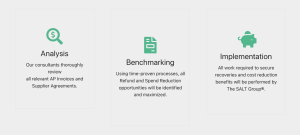
Many businesses lose money not because of major fraud, but because of small, recurring invoicing mistakes that go unnoticed. Duplicate payments, missed tax exemptions, vendor billing errors, and inefficient workflows can quietly create significant financial leakage across accounts payable over time.
The challenge is that finance teams often lack the time and resources to continuously audit invoices, validate tax charges, and identify overpayments hidden within thousands of transactions.
Unlike internal finance teams, The SALT Group‘s consultants review invoice processing records , tax applications, and operational spend categories every day. Their performance-based model means clients pay only when savings or recoveries are identified.
The SALT Group helps businesses uncover these hidden costs through performance-based reviews of sales & use tax and operational spend.
| Challenge | SALT Solution | Business Benefit |
| Duplicate Payments Across Departments | Reviews accounts payable records to identify duplicate payments, payment overlaps, and control gaps across locations and departments. | Reduced cash leakage and stronger financial controls. |
| Sales Tax Overpayments from Missed Exemptions | Conducts comprehensive tax reviews to identify overpaid taxes, missed exemptions, credits, and refund opportunities. | Recovered tax dollars, improved cash flow, and increased sales tax refund opportunities. |
| Vendor Billing Errors in Invoice Approvals | Audits invoices, contracts, and vendor charges to uncover pricing discrepancies, duplicate charges, and unauthorized fees. | Lower vendor spend and improved contract compliance. |
| Human Errors and Inaccuracy | Performs detailed invoice and transaction reviews to uncover costly errors that manual processes often miss. | Greater financial accuracy and fewer invoice processing errors. |
| Delayed Detection of Overbilling and Leakage | Identifies historical overpayments and recurring spend issues before they compound into larger losses. | Faster recovery of funds and reduced long-term financial leakage. |
| Inefficient Accounts Payable Workflows | Evaluates spending patterns, invoice approval practices, and AP processes to uncover inefficiencies that increase costs. | Improved visibility, streamlined workflows, and better operational efficiency. |
| High Labor and Administrative Costs | Handles the audit, analysis, recovery, and optimization process on behalf of the client with minimal internal involvement. | Reduced administrative burden and more time for finance teams to focus on strategic priorities. |
The longer invoicing errors go undetected, the more they can impact your bottom line. Discover how much your business could be recovering.
TL;DR
- Duplicate payments can create significant cash leakage when invoices are processed across disconnected departments or systems.
- Missed tax exemptions and incorrect tax treatment often result in avoidable overpayments and lost refund opportunities.
- Vendor billing discrepancies frequently inflate operating costs and go unnoticed during routine invoice reviews.
- Manual invoicing increases the risk of data-entry mistakes, payment errors, and inaccurate financial records.
- Inefficient approval workflows slow invoice processing, create bottlenecks, and increase administrative costs.
- Regular invoice reviews help uncover hidden savings opportunities, reduce financial leakage, and improve profitability.
FAQs
1. How can I identify invoice processing errors before they impact profitability?
Common invoice processing errors include duplicate payments, incorrect invoice amounts, unauthorized vendor charges, tax miscalculations, and data-entry mistakes. Regular invoice reviews, transaction audits, and validation checks can help identify these issues before they create significant financial leakage.
2. Could my business be overpaying without realizing it?
Yes. Many businesses unknowingly overpay through duplicate invoices, missed tax exemptions, vendor billing discrepancies, and recurring fees that are rarely reviewed. Even small overpayments can accumulate into substantial losses when spread across thousands of transactions.
3. What if my accounts payable team already reviews invoices internally?
Internal teams are often focused on keeping invoices moving and supporting day-to-day operations. As a result, they may not have the time, specialized expertise, or benchmarking data needed to identify every recovery opportunity. Independent reviews can uncover hidden overpayments that routine processes often miss.
4. What happens if no savings or recoveries are found?
The SALT Group operates on a performance-based model. If no recoveries or savings opportunities are identified, there is no fee for the review. This allows businesses to evaluate potential opportunities without taking on financial risk.
Turn Accounts Payable Oversights into Measurable Savings
Small invoice processing errors may seem insignificant individually, but across thousands of transactions they can quietly erode profitability. Identifying duplicate payments, tax overpayments, and billing discrepancies early helps businesses improve cash flow and reduce unnecessary spending.
Key Learnings:
- Hidden overpayments can quietly reduce profitability.
- Early identification of billing and tax errors improves recovery opportunities.
- Expert reviews help businesses recover lost dollars and strengthen financial performance.
For over 38 years, The SALT Group has helped businesses recover overpayments, reduce operating costs, and improve profitability through performance-based reviews.
Recover lost invoice value with structured cost recovery expertise!