

Review the seven vendor master data risks below to understand where accounts payable controls may need attention.
Vendor master data errors can create avoidable accounts payable risks, from duplicate supplier records and unverified bank-detail changes to payments sent using outdated information. For finance leaders and controllers at mid-sized businesses, identifying these weaknesses is an important step toward strengthening payment controls.
A 2025 survey by Strategic Treasurer and Deluxe found that 70% of respondents identified account validation when adding or changing supplier payment information as a security concern. This highlights why businesses should review how supplier records are created, updated, and approved.
When these controls are weak, businesses may face duplicate payments, payment delays, time-consuming corrections, or increased exposure to fraudulent payment requests. Reviewing vendor master data processes can help finance teams identify gaps, clarify responsibilities, and prioritize improvements.
Because a single supplier-record weakness can affect multiple transactions, finance teams should prioritize sensitive changes and recurring exceptions before they lead to further payment errors or costly investigations.
For finance leaders, the challenge is to maintain reliable supplier information and strengthen accounts payable controls without creating unnecessary delays for legitimate transactions. That requires clear ownership of vendor records, documented verification procedures, appropriate access restrictions, and regular reviews of exceptions.
This guide examines seven vendor master data risks that can create accounts payable exposure, explains why each matters, and outlines practical steps finance teams can take to reduce the risk.
At a Glance: The 7 Vendor Master Data Risks
- Duplicate or near-duplicate supplier records
- Unauthorized or fraudulent bank-detail changes
- Incomplete or incorrect supplier identification and tax data
- Fake or insufficiently verified vendors
- Dormant vendor accounts that remain payment-enabled
- Excessive access to vendor records and weak segregation of duties
- Outdated payment terms and remittance information
What is a vendor master file?
A vendor master file is a centralized record of approved suppliers used by finance, procurement, and accounts payable. It typically stores supplier names, addresses, tax identifiers, banking details, payment terms, and other information needed to process transactions accurately and maintain reliable supplier records.
1. Duplicate or Near-Duplicate Vendor Records

What is the risk?
Duplicate vendor records occur when the same supplier appears more than once in the accounts payable system. One record might use the supplier’s legal name, while another uses a trading name, former address, abbreviation, or slightly different spelling.
Duplicates can arise from decentralized onboarding, acquisitions, inconsistent data-entry practices, supplier reorganizations, or systems that do not reliably identify matching records.
The problem goes beyond having an untidy accounts payable database. When records for the same supplier remain separate, invoices, credits, payments, and purchasing history may be distributed across multiple entries. Finance teams may struggle to understand the full commercial relationship or identify inconsistencies.
Why it matters
- Makes duplicate invoices or payments harder to identify.
- Fragments supplier-level purchasing and payment histories.
- Complicates the reconciliation of invoices, credits, and outstanding balances.
- Increases manual investigation and correction work.
- Reduces visibility into total supplier spend and weakens accounts payable oversight when reviewing purchasing arrangements.
These consequences show why accounts payable teams need consistent verification procedures as part of a broader vendor risk management approach.
How can finance teams reduce the risk?
Establish consistent supplier naming and onboarding standards. Use automated matching to flag potential duplicates based on relevant fields, such as legal name, address, and tax identification number where appropriate. Treat matching results as candidates for review rather than automatically merging records.
Before consolidating duplicate entries, check their open purchase orders, unpaid invoices, credit notes, tax documentation, and payment instructions. Confirm which record should remain active and preserve the transaction history required for accounting and audit purposes. Including duplicate resolution in vendor risk management helps maintain consistent supplier records and reliable transaction histories.
Track how many duplicate candidates are identified, how many are resolved, and whether new duplicates continue to appear across accounts payable records. Recurring issues may indicate that onboarding requirements, data-entry procedures, or system matching rules need improvement as part of the broader vendor risk management process.
2. Unauthorized or Fraudulent Vendor Bank-Detail Changess
What is the risk?
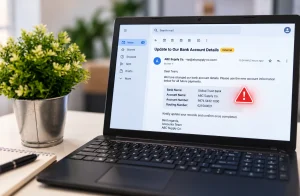
This risk occurs when a supplier’s bank account or payment instructions are changed without sufficient confirmation that the request is genuine and authorized.
A request might come from an external impersonator, someone using a compromised supplier email account, or an internal user acting outside approved procedures. Fraudulent requests can refer to real invoices, use familiar business language, and arrive shortly before a scheduled payment.
The critical weakness is accepting a change based on the message alone. An email address, familiar signature, or plausible explanation does not establish that the new bank account belongs to the supplier. This makes independent verification a critical safeguard for protecting accounts payable transactions from unauthorized payment diversions.
Why it matters
- Payments being sent to an unintended recipient.
- Financial losses that may be difficult to recover.
- Delayed payments to legitimate suppliers while the incident is investigated.
- Additional reconciliation and administrative work.
- Gaps in documentation that make vendor risk management decisions harder to justify and audit.
How can finance teams reduce the risk?
Use a documented process for changing supplier banking information. Independently verify each request through a trusted phone number or contact source already held in your records, or another reliable source. Do not rely solely on contact details supplied in the change request.
Where practical, separate the person entering the change from the person approving it. Record who requested, verified, and authorized the change, and retain the supporting evidence. Documented responsibilities and approval evidence make vendor risk management procedures easier to review and enforce.
Apply additional scrutiny to high-value suppliers, unusual requests, and changes made shortly before significant payments. Establish a clear procedure for urgent requests so that pressure to pay quickly does not bypass verification.
These safeguards should be part of the wider accounts payable controls framework, alongside invoice approval and payment-release checks.
3. Incomplete or Incorrect Supplier Identification and Tax Data
What is the risk?
Supplier identification and tax data help establish who a supplier is and how transactions should be documented and processed. Depending on the jurisdiction and supplier relationship, relevant information may include:
- Legal entity name and registered address.
- Tax identification number.
- Tax classification.
- Required tax forms or certificates.
- Other documentation needed for the business relationship.
Errors can occur during onboarding, manual data entry, supplier restructuring, or the transfer of information between procurement, tax, and finance systems. Accurate supplier information helps accounts payable teams process transactions consistently and reduce avoidable corrections.
A record may appear complete while containing a mismatch between the supplier’s legal identity and the information used for reporting or withholding decisions. The risk is not limited to missing fields; outdated or inconsistent information can also cause problems.
Why it matters
- Creates discrepancies in tax reporting and supporting documentation.
- Contributes to incorrect withholding or tax treatment.
- Delays transactions while missing or inconsistent information is resolved.
- Makes it harder to demonstrate that supplier records were validated.
- Causes the same error to recur across accounts payable transactions, systems, or reporting periods.
Requirements vary by jurisdiction, supplier type, and transaction. A single checklist may not be suitable for every supplier relationship.
How can finance teams reduce the risk?
Define the identity and tax information required for each supplier category. Assign responsibility for collecting, validating, approving, and updating that information.
Use validation procedures appropriate to the relevant jurisdiction. For eligible US suppliers, for example, IRS Taxpayer Identification Number (TIN) Matching may help authorized payers validate name and TIN combinations for applicable reporting purposes.
Use exception reports to identify missing information, incomplete documentation, and mismatches. Investigate recurring errors to determine whether the cause is unclear ownership, poor onboarding, manual entry, or inconsistent data transfers.
The aim is to resolve uncertainty before it creates accounts payable losses. Use proportionate vendor risk management checks rather than treating every missing detail as misconduct.
What is the difference between master data and transaction data?
Master data describes a supplier and remains relevant across multiple business transactions, including its identity, tax details, and payment instructions. Transaction data records individual business activities, such as purchase orders, invoices, and payments. Errors in master data can therefore affect many transactions.
4. Fake or Insufficiently Verified Vendors
What is the risk?
A fake or insufficiently verified vendor is a supplier record activated without enough evidence to establish the supplier’s legitimacy, the business purpose of the relationship, or the appropriate authorization.
In a deliberate fraud scheme, a fictitious supplier may be created to submit invoices for goods or services that were never provided. In other situations, the supplier may be a legitimate business, but the organization has not adequately documented who requested the supplier, what it will provide, or who is responsible for confirming delivery.
An incomplete record is not, by itself, proof of fraud. These warning signs should inform vendor risk management reviews, but be assessed together rather than treated as automatic proof of misconduct.
Why it matters
- Allows payments to unauthorized or fictitious suppliers, increasing accounts payable exposure.
- Makes it harder to establish whether goods or services were ordered and delivered.
- Leaves finance teams without a clear internal contact to confirm transactions.
- Increases the time needed to investigate suspicious invoices and payments.
- Weakens accountability for supplier onboarding and approval, creating gaps in vendor risk management.
How can finance teams reduce the risk?
Require a documented business purpose, an accountable internal requester, and appropriate procurement or business approval before activating a new supplier.
Validate supplier identity using reliable, independent sources and retain supporting documentation. Where appropriate, investigate unusual overlaps in banking details, addresses, contact information, or other identifiers.
Establish an exception process for suppliers that cannot immediately meet standard requirements. Define who can approve an exception, why it is permitted, what additional checks are required, and when the record must be reviewed again. Clear exception criteria help vendor risk management remain consistent without treating every documentation gap as suspected fraud.
Treat missing information as a reason to investigate, not as conclusive evidence of misconduct. The aim is to resolve uncertainty before payment exposure increases.
5. Dormant Vendor Accounts That Remain Payment-Enabled
What is the risk?
A dormant vendor is a supplier record that has not been used for a defined period but remains active or available for transactions in the accounts payable system.
Dormant records naturally accumulate when projects end, suppliers are replaced, business locations close, or purchasing arrangements change. Keeping historical supplier information may be necessary for accounting, audit, tax, and legal purposes. However, retaining historical information is different from allowing the record to be used for new transactions without review.
The risk arises when an inactive supplier is treated as current without confirming that the relationship, supplier details, and payment instructions remain valid.
Over time, contact details may become outdated, bank accounts may change, contracts may expire, and the original business owner may no longer be available to confirm a request. These changes can increase accounts payable exposure if vendor risk management procedures do not require revalidation before a dormant supplier is reused.
Why it matters
- Reused without confirming that the supplier relationship remains valid.
- Contains outdated contact details, payment instructions, or commercial terms.
- Increases the number of records requiring ongoing maintenance.
- Makes it harder to distinguish current suppliers from historical relationships.
- Creates additional exposure if a record is reactivated without appropriate checks.
Dormancy alone does not indicate fraud. It is a signal that the record may need review before reuse.
How can finance teams reduce the risk?
Set inactivity thresholds that reflect supplier type, purchasing frequency, and business needs. Review inactive records with the relevant business owners and restrict payment capability where appropriate. This risk-based approach makes vendor risk management more proportionate to supplier activity and business needs.
Before reactivating a dormant vendor, confirm the current business need, supplier identity, banking details, and required approvals. Check for outstanding purchase orders, unpaid invoices, credits, or other open items before deactivating or changing a record. These checks help accounts payable teams confirm that dormant supplier records are still appropriate for current transactions.
Retain the historical information needed for accounting, audit, and legal purposes. Track dormant records reviewed, reactivations requiring exceptions, and recurring data issues to identify where the process needs improvement.
How often should I review my vendor master data?
Review frequency depends on transaction volume, supplier risk, and business needs; vendor risk management should reflect these factors. Review bank-detail changes, dormant-vendor reactivations, unexplained discrepancies, and recurring payment exceptions promptly. Schedule broader reviews of duplicate records, access permissions, inactive vendors, and data quality.
6. Excessive Access to Vendor Records and Weak Segregation of Duties
What is the risk?
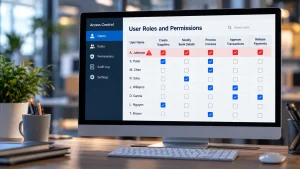
Excessive access occurs when users have more system permissions than they need to perform their jobs. The risk is particularly significant when one user can create a supplier, change sensitive details, process invoices, approve transactions, and release payments without independent review.
This situation can arise when permissions are never restricted, role changes are not reflected in the system, shared credentials are used, temporary access is not removed, or service accounts lack clear ownership.
The concern is the combination of broad permissions and insufficient oversight. Someone who can change supplier bank details and approve or release the resulting payment may be able to make an unauthorized change without another person noticing. Broad access can also allow ordinary mistakes to go undetected.
Why it matters
- Increases the number of people able to change sensitive supplier information.
- Allows related tasks to be completed without independent oversight.
- Makes it harder to establish who made a change and why.
- Leaves former employees or staff in new roles with unnecessary permissions.
- Reduces the effectiveness of other accounts payable controls.
How can finance teams reduce the risk?
Apply the principle of least privilege: users should have only the permissions necessary to perform their assigned duties. Role-based permissions support vendor risk management by limiting unnecessary access to sensitive supplier information.
Where practical, separate supplier creation, sensitive record changes, invoice processing, transaction approval, and payment release. Review access rights periodically and whenever employees change roles or leave the organization.
Maintain reliable audit logs for supplier-record changes and privileged actions. Include temporary access, emergency privileges, and service accounts in access reviews. These records help accounts payable teams investigate unauthorized activity and provide evidence that vendor risk management controls are operating as intended.
If the size of the finance team makes full segregation impractical, document compensating controls. For example, an independent reviewer may check bank-detail changes and payment runs. The key is to ensure that sensitive actions receive appropriate oversight and that vendor risk management controls can be traced to accountable individuals.
Who should own vendor master data?
Vendor master data ownership should be clearly assigned across finance, accounts payable, procurement, and IT. Finance and accounts payable typically oversee payment-related information and controls, procurement validates supplier and commercial details, and IT supports system access, security, and data synchronization.
7. Outdated Payment Terms and Remittance Information
What is the risk?
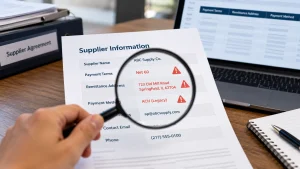
Supplier records may retain payment terms, remittance addresses, payment methods, contact details, or other instructions that no longer match the current supplier agreement.
These discrepancies can follow contract renewals, supplier mergers, changes in billing entities, updated remittance processes, or data migrations. Information may have been correct when first entered but become outdated because no one was responsible for updating it or because a change in one system was not reflected in another.
When supplier records conflict with approved agreements or other authoritative information, accounts payable teams may be uncertain which details to follow.
Why it matters
- Causes accounts payable transactions to be delayed, misdirected, or returned.
- Creates discrepancies between recorded and agreed payment terms.
- Contributes to missed payment deadlines or overlooked opportunities to reduce costs.
- Weakens cash-flow forecasts and payment planning.
- Increases the work required to investigate and correct payment exceptions.
Not every discrepancy indicates fraud. The priority is to resolve differences before they affect accounts payable transactions, with vendor risk management procedures guiding verification and escalation.
How can finance teams reduce the risk?
Identify the authoritative source for each key supplier field. For example, payment terms should be reconciled with the applicable approved contract or purchase agreement, while changes to remittance instructions should follow a controlled verification and approval process.
Assign clear responsibility for maintaining supplier information. When changes occur, confirm the relevant details and ensure updates are synchronized across systems that rely on the data. Defined ownership supports vendor risk management by helping ensure that approved changes are reflected consistently across systems.
Track recurring exceptions in accounts payable, including returned payments, payment corrections, and discrepancies in vendor master data. Monitoring these issues can help identify unclear ownership, outdated supplier information, or system-update problems that increase vendor risk management concerns.
How to Strengthen Vendor Master Data Controls
A practical vendor risk management approach can reduce accounts payable exposure through seven checks:
- Prevent duplicate vendor records.
- Independently verify supplier bank-detail changes.
- Validate supplier identity and tax information.
- Confirm new vendors are legitimate and approved.
- Review dormant vendor accounts before reactivation.
- Restrict access to vendor master data.
- Keep payment information aligned with approved agreements.
Review your operating expenses, too. Strong controls help reduce preventable payment errors, but they do not identify every historical overpayment or opportunity to reduce ongoing costs.
How The SALT Group Helps Identify Operating Expense Savings
Strong supplier data controls help businesses reduce preventable payment errors and protect the accounts payable process. However, these controls do not identify every historical overpayment or opportunity to reduce ongoing operating costs. Reviewing operating expenses separately can help businesses uncover both.
The SALT Group works with mid-sized businesses, particularly manufacturers and multi-location operators, to identify potential recoveries and savings across selected operating expense categories.
A real-world example
Midland Farms, Inc., a dairy processing and distribution company, identified savings opportunities involving waste services, utilities, and sales and use tax during an operating expense review. The findings included waste-service billing involving fewer hauls but more tonnage, a utility arrangement involving a fixed rate with a new vendor, and $276,000 in sales and use tax reportedly paid in error on electricity. The client information reports $254,592.12 in savings across waste, sales and use tax, and utilities.
Depending on the engagement, these reviews may include:
- Sales & Use Tax
- Freight Review
- Parcel Review
- Waste Services
- Uniforms & Facilities
- Merchant Card Services
With more than $1 billion in reported client savings, The SALT Group brings experience in identifying opportunities to reduce operating expenses and improve profitability.
The SALT Group uses a performance-based approach, with engagement terms defining how fees apply to identified recoveries or savings. Under this model, clients are not billed on an hourly basis for the review work, and a dedicated client manager helps coordinate the engagement while limiting demands on internal teams.
These services complement but do not replace, internal supplier onboarding, bank-detail verification, access management, invoice approval, and payment controls. Those responsibilities remain with the business. The distinction is important: vendor risk management controls help protect the payment process, while operating expense reviews can identify opportunities within historical transactions and ongoing costs.
Explore Additional Opportunities to Reduce Operating Expenses
Strong vendor risk management helps reduce preventable payment errors and strengthen the accounts payable process. However, reviewing supplier data is separate from identifying opportunities to recover past overpayments or reduce ongoing operating expenses.
If you’re also looking for ways to lower operating costs, The SALT Group’s Cost Savings Guide offers a separate next step. It shares best practices for reducing operating expenses and helps businesses explore potential savings opportunities across expense categories.
FAQs
1. How can I tell whether vendor master data is putting my accounts payable process at risk?
Start by reviewing whether your accounts payable process has duplicate supplier records, recent bank-detail changes, incomplete identity or tax information, dormant vendors that remain payment-enabled, and users with broad system access. Look for recurring exceptions, missing verification evidence, and discrepancies between supplier records and approved agreements. Reviewing these warning signs early helps accounts payable teams address weaknesses before they result in payment errors or losses.
2. What should I do first if I want to reduce the risk of fraudulent vendor payments?
Prioritize independent verification of supplier bank-detail changes. Use a trusted contact source, require appropriate approval, and retain evidence of each change. Then review who can create or modify supplier records and who can approve or release payments. These steps help protect accounts payable from unauthorized changes and strengthen vendor risk management without relying solely on email-based requests.
3. Which metrics should I track to know whether my vendor risk management controls are working?
Track potential duplicate records, the percentage of bank-detail changes with documented verification, unresolved supplier-data exceptions, dormant-vendor reactivations, access-review findings, returned payments, and the time taken to resolve exceptions. Review trends and root causes rather than relying on a single metric. These measures help reveal recurring weaknesses and show where corrective action may be needed.
4. How can I strengthen vendor controls without slowing down invoice processing?
Use risk-based controls instead of applying the same level of review to every transaction. Standardize onboarding, automate routine data checks where practical, assign clear owners to exceptions, and independently verify sensitive changes. Monitor exception-resolution time alongside control effectiveness so that stronger safeguards do not create unnecessary delays for legitimate transactions. This approach helps accounts payable teams maintain efficient processing while applying vendor risk management checks in proportion to the risk.
5. Does a clean vendor master guarantee accurate supplier payments?
No. Accurate supplier records reduce the risk of errors caused by incorrect vendor information, but they cannot guarantee that every payment is correct. Invoice accuracy, purchase-order matching, contract terms, approval workflows, and payment execution also require appropriate checks. Reliable records are one part of protecting accounts payable; effective vendor risk management must also work alongside invoice matching, approval, and payment controls.
Reduce Accounts Payable Exposure and Improve Financial Oversight
Finance teams can reduce accounts payable risks by strengthening supplier data controls and reviewing exceptions before they lead to payment errors or financial losses. Prioritize these five actions:
- Validate supplier information to identify duplicate and outdated records.
- Independently verify changes to bank details and payment instructions.
- Restrict access to vendor records and separate critical responsibilities.
- Review dormant vendors before reactivating supplier records.
- Monitor recurring exceptions to improve payment accuracy and oversight.
Reliable vendor master data helps protect the payment process, but it does not identify every historical overpayment or opportunity to reduce ongoing operating expenses. A separate review of eligible expense categories can help uncover those savings opportunities.
Talk to The SALT Group about identifying potential overpayments and reducing ongoing operating costs.