

Learn six signs your waste management pickup schedule needs a closer review to avoid unnecessary expenses and keep operations efficient.
Schedule a Waste Expense ReviewGet the Free CFO Guide to Cost Reduction
Renewing a commercial waste agreement can seem routine: review the rate, confirm the service, and sign for another term. But a waste management contract that suited your business three years ago may no longer reflect current waste volumes, facility needs, or operating schedules. Changes in production can make an old arrangement an expensive fit.
Oversized containers, unnecessary pickups, automatic price escalations, and additional fees can inflate recurring expenses. If invoices are processed without checking charges against service requirements and contract terms, these costs can go unnoticed and pressure operating margins. Reviewing the waste management contract before renewal helps finance and operations teams identify where the arrangement no longer matches the business.
The cost environment also deserves attention. The U.S. Bureau of Labor Statistics reported that its Producer Price Index for waste collection rose 4.6% over the 12 months ending September 2026. This broad measure does not predict an individual company’s bill, but it reinforces the need to review rates rather than assume they remain competitive.
Before renewing, reassess container sizes, collection schedules, service levels, pricing, and contract conditions. A thorough waste management contract review can reveal changed requirements, charges that need validation, and negotiable terms.
The eight questions below show how to make cost optimization an ongoing financial discipline while keeping waste services aligned with business needs.
- Are our container sizes and pickup frequencies still aligned with actual waste volumes?
- What is our total waste management cost, including surcharges and additional fees?
- Are contractual rate increases being applied correctly?
- Does our current service scope still reflect our facility footprint and operational requirements?
- Does the waste management contract allow us to adjust services as waste volumes and business needs change?
- Are the contracted collection schedules and service levels meeting our current operational requirements?
- What are the waste management contract’s renewal terms, price escalators, and notice requirements?
- Are our current rates competitive with comparable local services?
1. Are Our Container Sizes and Pickup Frequencies Still Aligned With Actual Waste Volumes?
What it is
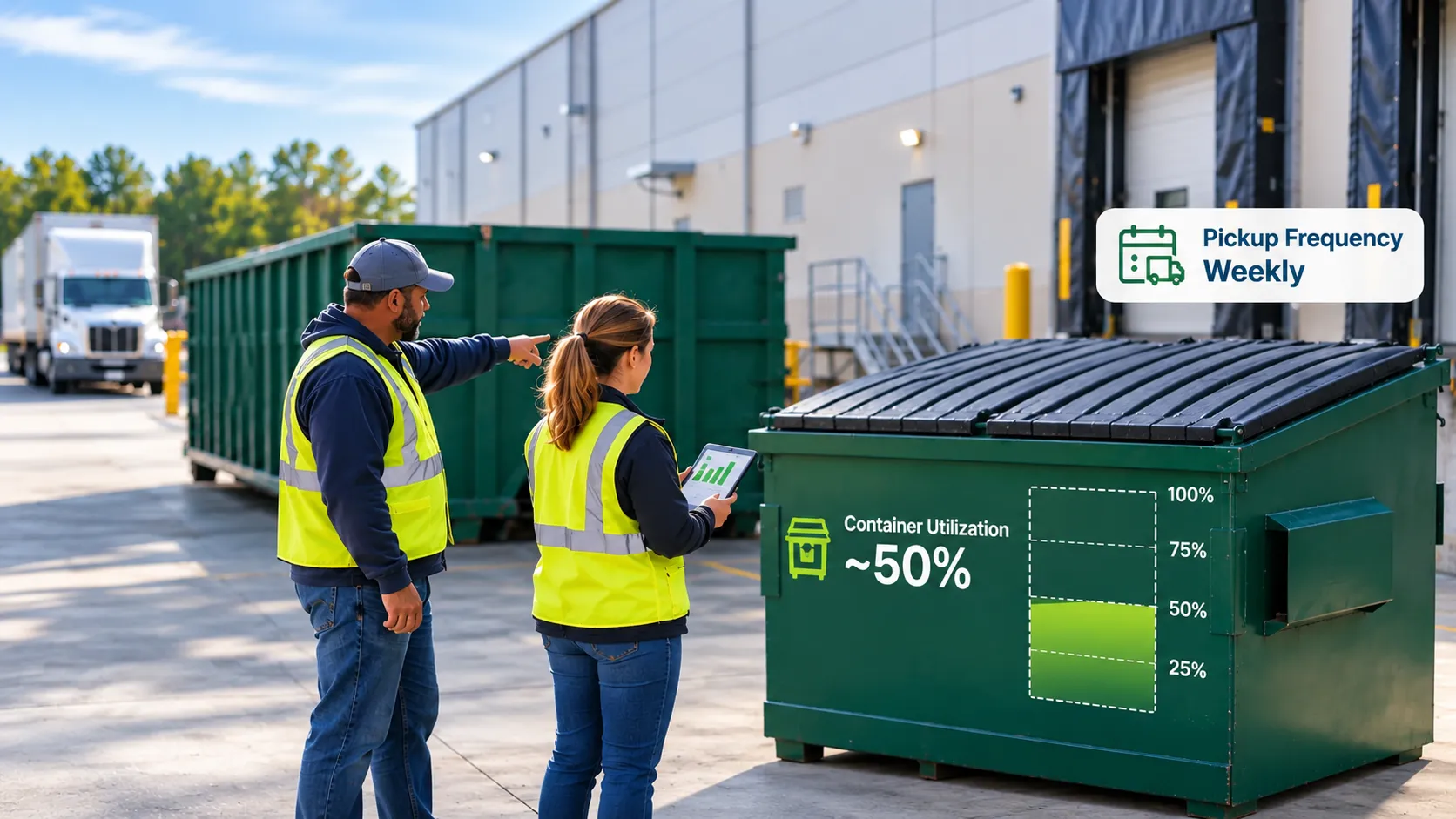
Container sizes and collection frequencies should reflect the amount of waste your business generates, not simply the requirements established when the agreement was signed. Changes in production output, staffing levels, packaging, operating hours, and facility usage can affect how much waste accumulates and how often it needs to be collected.
A waste management contract should be reviewed against current disposal volumes to determine whether the agreed container capacity and pickup schedule remain appropriate. For example, a manufacturing facility that has reduced production may no longer need the same number of weekly collections.
Conversely, increased output or additional shifts may require more frequent pickups or larger containers. Reviewing these requirements helps identify opportunities to right-size services without compromising operations.
Why it matters
- Unused container capacity: Businesses may be paying for larger dumpsters than their operations require, creating opportunities for cost optimization through better-sized containers.
- Unnecessary collections: Frequent pickups can increase recurring expenses when containers are consistently underutilized.
- Overflow and additional charges: Insufficient capacity or infrequent collections can result in overflow, extra pickups, or other applicable fees.
- Inefficient resource allocation: Reviewing container utilization across facilities can help businesses align service levels with actual disposal requirements and improve cost optimization.
Pro Tip: Review at least 8–12 weeks of waste collection records, invoices, and container utilization data. For each facility, record container sizes and quantities, scheduled pickup frequency, actual collection dates, and estimated fill levels. Where available, use disposal weights, service tickets, or collection reports to validate estimates. Account for seasonal peaks, production shutdowns, and changes in facility activity.
Identify consistently underfilled containers, premature collections, and locations with recurring overflows. Compare current and proposed schedules, including fees for additional pickups or changes in container capacity.
For example, if a facility’s dumpster is consistently half-full before collection, consider reducing pickup frequency. Test the proposed schedule against peak operating periods to ensure it will not cause overflow, compliance concerns, or operational disruptions.
A detailed waste management contract review can uncover these service mismatches and support cost optimization through better-aligned container sizes and collection schedules.
2. What Is Our Total Waste Management Cost, Including Surcharges and Additional Fees?
What it is
The quoted base rate does not necessarily represent the full amount a business pays for waste collection. In addition to recurring service charges, invoices may include fuel surcharges, environmental or regulatory fees, administrative charges, container rental costs, additional pickup fees, overflow charges, and contamination-related fees.
Businesses should evaluate the complete cost structure rather than reviewing the contracted rate in isolation. A review of your waste management contract should establish which charges are included in the agreed pricing, which are billed separately, and whether each charge is supported by the contract and applicable service records. It is also important to distinguish between legitimate fees and charges that may have been incorrectly applied, duplicated, or left unexplained.
Why it matters
- Limited cost visibility: Reviewing only base rates can conceal the actual cost of waste collection services.
- Accumulating surcharges: Recurring fuel, environmental, and administrative fees can increase total expenses over time.
- Potential billing discrepancies: Charges that do not align with contractual terms or documented services may require investigation and correction.
- Missed Cost Optimization Opportunities: Identifying unsupported fees, billing discrepancies, and unnecessary charges can help businesses reduce avoidable expenses.
Pro Tip: Collect at least 12 months of waste management invoices and reconcile them against the original contract, amendments, and service records. Create a charge-by-charge record of invoice dates, service locations, charge descriptions, billed amounts, applicable contractual rates, supporting documentation, and identified discrepancies.
For each recurring fee, verify how it is calculated, whether the contract authorizes it, and whether it matches the agreed rate or formula. Confirm that additional pickups have documented service requests, container rental charges reflect the equipment provided, and fuel and other surcharges follow contractual provisions. Flag duplicate entries, unexplained rate changes, charges for services not received, and fees that continue after a service or container is discontinued.
For businesses with multiple facilities, compare charge categories across locations. Investigate differences in rates, surcharge calculations, and fee frequency, accounting for variations in service scope and local requirements before flagging discrepancies.
A detailed review of waste management costs can uncover billing discrepancies, unsupported fees, and pricing opportunities, supporting cost optimization and more informed contract negotiations.
3. Are Contractual Rate Increases Being Applied Correctly?
What it is
Commercial waste management agreements may include scheduled price escalators, percentage-based adjustments, or other provisions that allow providers to increase rates during the contract term. Businesses should verify whether each increase follows the agreed contractual percentage, calculation method, effective date, and applicable conditions.
Reviewing historical invoices, original pricing, contract amendments, and annual adjustments helps businesses understand how their spending has changed. A waste management contract should be checked against its escalation clauses to confirm that increases were applied at the correct rates, on the specified dates, and under the conditions outlined in the agreement.
Why it matters
- Incorrect price adjustments: Increases that exceed agreed percentages or do not follow contractual provisions may require investigation.
- Unclear escalation calculations: Businesses may struggle to verify adjustments when the provider does not clearly explain how new rates were calculated.
- Unapproved charges: Additional increases that are not supported by the agreement can inflate recurring expenses.
- Missed Cost Optimization Opportunities: Identifying incorrectly applied increases and unsupported adjustments can help businesses correct billing errors and strengthen vendor negotiations.
Pro Tip: Compare year-over-year changes in base rates and surcharges against the escalation provisions in your agreement. Check the applicable percentages, calculation methods, effective dates, notice requirements, and any conditions governing price adjustments. This review supports cost optimization by helping businesses distinguish permitted contractual increases from discrepancies that require correction.
Review the original agreement alongside any amendments to ensure that the correct provisions are being applied. If discrepancies arise, document the differences and request supporting calculations or corrections from the provider.
A detailed review of your waste management contract can help verify whether price increases are contractually valid and correctly applied. Addressing discrepancies can prevent unsupported charges from carrying into future billing periods and support cost optimization before renewal.
4. Does Our Current Service Scope Still Reflect Our Facility Footprint and Operational Requirements?
What it is
A business’s waste collection requirements can change as its facility footprint and operations evolve. Expanding production, opening new locations, relocating facilities, consolidating operations, or closing sites can affect the number of containers required, collection schedules, and overall service scope.
Businesses should assess whether the services included in their current agreement still correspond to their actual facility requirements. A waste management contract covering multiple locations should be reviewed at both the individual facility and consolidated business levels. This helps establish whether each location receives the appropriate services and whether the overall arrangement reflects current operational needs.
Why it matters
- Closed or relocated facilities: Businesses may continue paying for services that are no longer required at certain sites.
- Expanded operations: New facilities or increased production may require additional containers, collections, or specialized services.
- Inconsistent service arrangements: Different locations may have overlapping or unsuitable service provisions.
- Inefficient facility-level spending: Reviewing services across locations can support cost optimization by identifying redundant arrangements and opportunities to align spending with actual requirements.
Pro Tip: Prepare an updated inventory of all operating facilities and document the waste services required at each location. Include container sizes, pickup frequencies, waste streams, service schedules, and current charges. Compare this information with the locations and services listed in your waste management contract agreements.
For example, a manufacturer that consolidates production from two facilities into one may no longer need the same collection arrangements across its original locations. Review whether the existing waste management contract allows the business to remove redundant services or revise the scope without incurring unnecessary penalties.
Comparing facility-level requirements with contracted services can also reveal differences in pricing and service arrangements. This analysis supports cost optimization by helping businesses align waste management spending with their current operating footprint.
5. Does the Waste Management Contract Allow Us to Adjust Services as Waste Volumes and Business Needs Change?
What it is
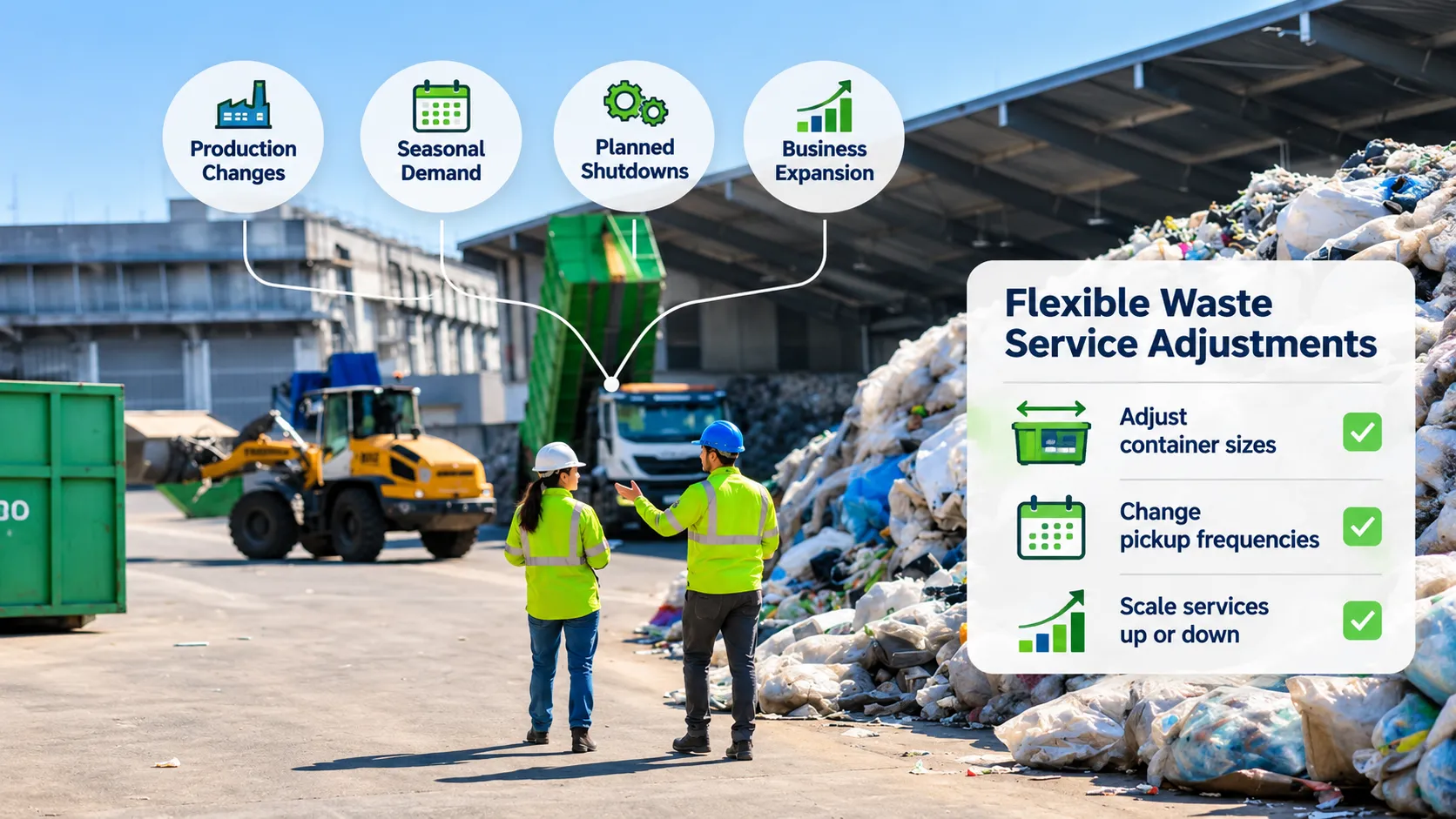
Waste generation is not always consistent throughout the year. Seasonal demand, production schedules, staffing changes, planned shutdowns, new projects, and business expansion can all affect disposal requirements. A service arrangement that works during normal operating periods may become unsuitable when waste volumes increase or decrease.
The agreement should clearly explain how businesses can modify container sizes, collection frequencies, and other services when operational requirements change. Reviewing these provisions is an important part of assessing whether a waste management contract can accommodate changing operational needs.
The agreement should also specify applicable notice periods, minimum service commitments, modification fees, container removal charges, and approval procedures to support cost optimization as operational requirements change.
Why it matters
- Unnecessary recurring expenses: Businesses may continue paying for fixed collection schedules during periods of reduced activity.
- Unexpected service costs: Increased waste volumes may require additional collections or temporary capacity at extra cost.
- Modification restrictions: Notice periods, minimum commitments, or adjustment fees may make service changes more expensive.
- Limited spending flexibility: The ability to adjust services as requirements change supports cost optimization by helping businesses avoid paying for unnecessary capacity or collections.
Pro Tip: Review the waste management contract’s provisions for service modifications, including how to request changes, how much notice is required, and whether additional charges apply. Check whether seasonal adjustments, temporary service increases, and reductions during planned shutdowns are permitted.
Also, distinguish between changes that require a formal contract amendment and routine service requests that can be handled through the provider’s standard process. This distinction can affect how quickly adjustments are implemented and whether additional charges apply.
For example, a manufacturer experiencing a temporary production slowdown may need fewer collections for several weeks rather than a permanent reduction in service. Reviewing the available adjustment options can help avoid paying for unnecessary capacity. These provisions should form part of a broader waste management contract review to identify practical cost optimization opportunities while maintaining operational continuity.
6. Are the Contracted Collection Schedules and Service Levels Meeting Our Current Operational Requirements?
What it is
The agreement should establish the services a provider is expected to deliver, including scheduled pickup days, collection frequency, response procedures for missed pickups, and any agreed additional services. Reviewing these commitments helps businesses determine whether their waste management contract reflects their current operational requirements. However, contractual commitments should be assessed against actual service delivery.
Businesses should review whether collections occur as scheduled, whether missed pickups are resolved within the agreed timeframe, and whether communication with the provider is adequate. They should also assess whether current service levels support the facility’s operating hours, waste generation patterns, and site-specific requirements. This helps determine whether the existing waste management contract remains suitable for daily operations.
Why it matters
- Missed or delayed collections: Accumulating waste can create operational disruptions and, depending on the waste involved, sanitation or safety concerns.
- Additional service charges: Businesses may incur extra costs when they need to arrange collections outside the regular schedule.
- Inadequate service response: Delayed communication or unresolved service issues can make recurring problems harder to address.
- Missed cost optimization opportunities: Reviewing actual service delivery against contractual commitments can reveal areas where service levels or charges need attention.
Pro Tip: Maintain a facility-level service log recording scheduled and actual pickup dates, missed or delayed collections, additional service requests, related charges, and provider responses. Note when each issue was reported, the response and resolution times, and any operational impact.
Compare these records with the waste management contract’s service commitments to identify recurring failures. Check whether the agreement specifies collection windows, response timeframes, escalation procedures, service remedies, or credits for qualifying failures.
Since these provisions vary by contract, verify the applicable conditions, reporting deadlines, and documentation requirements before assuming a credit or adjustment is available. Retain supporting evidence, including service tickets, provider correspondence, and relevant invoices.
For manufacturing facilities, assess how collection delays affect loading areas, storage capacity, production schedules, and safe waste handling. Check whether pickup windows accommodate shift changes, restricted site access, and periods of higher waste generation.
Reviewing service performance alongside invoices and contractual terms can reveal where the current agreement falls short, informing negotiations and supporting cost optimization without compromising essential collection requirements.
7. What Are the Waste Management Contract’s Renewal Terms, Price Escalators, and Notice Requirements?
What it is
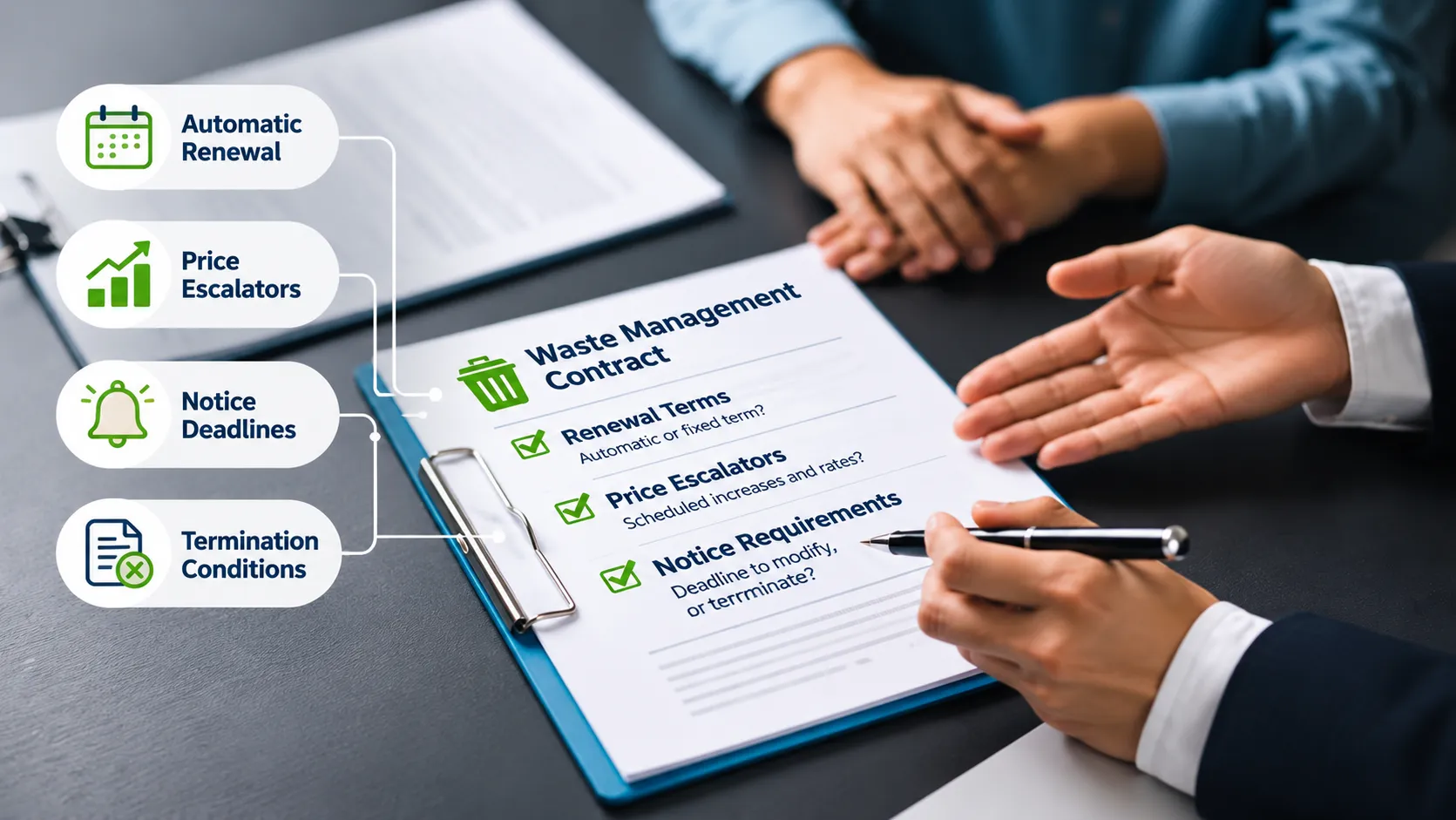
Commercial waste management contracts may include automatic renewal provisions, fixed contract periods, notice deadlines, termination conditions, and scheduled price adjustments. These clauses determine how an agreement continues, what happens when its term expires, and how much time a business has to review or renegotiate its arrangement.
Before renewing, businesses should check whether the agreement renews automatically, whether the next term triggers additional price increases, and what conditions apply if they want to modify or terminate the arrangement. They should also verify the notice deadlines and pricing provisions that will govern the next term.
Businesses should begin this review well before the renewal deadline. Waiting until the final weeks can leave insufficient time to investigate billing discrepancies, assess alternative service arrangements, and negotiate revised terms before an automatic renewal takes effect.
An early review gives finance and procurement teams more time to evaluate the agreement, identify cost optimization opportunities, and make an informed commitment.
Why it matters
- Missed notice deadlines: Failure to provide notice within the required period may trigger an automatic renewal.
- Unreviewed price increases: Renewal provisions may introduce new rates or adjustments that increase recurring expenses.
- Limited flexibility: Termination conditions, minimum commitments, or other restrictions may affect the ability to change providers or services.
- Reduced negotiating time: Discovering renewal deadlines late can leave businesses with less time to evaluate their options and pursue cost optimization.
Pro Tip: Maintain a centralized contract calendar that records expiry dates, automatic renewal provisions, notice periods, price escalation dates, and relevant termination conditions. Review the original agreement alongside any amendments to ensure that the latest terms are considered.
Start the renewal review well before the notice deadline. This allows Procurement and Finance teams to examine invoices, assess service performance, review current requirements, and compare pricing with relevant market benchmarks. Early preparation supports cost optimization by giving businesses more time to evaluate alternatives and negotiate appropriate contract changes.
An early review of the waste management contract can help businesses identify unfavorable terms, prepare for negotiations, and evaluate whether the existing arrangement remains commercially appropriate. This creates more opportunities for cost optimization before the next contract term begins.
How far in advance should a business review its waste management contract?
Businesses should begin reviewing a waste management contract at least 90–120 days before its renewal or cancellation notice deadline. This allows time to examine invoices, assess service requirements, compare market pricing, and negotiate changes before the agreement renews.
8. Are Our Current Rates Competitive With Comparable Local Services?
What it is
A provider may apply every charge correctly under an agreement while the overall pricing remains higher than comparable market rates. Contractual compliance and market competitiveness are two different considerations. Therefore, businesses should evaluate whether the rates they pay are reasonable for the services, waste streams, and operating requirements involved.
Benchmarking involves comparing current pricing with relevant market rates for comparable waste management contracts. These comparisons should account for factors such as geographic location, container size, pickup frequency, waste type, service scope, and facility requirements. Without these considerations, businesses may draw inaccurate conclusions from comparisons that do not reflect equivalent services.
Why it matters
- Above-market pricing: Existing rates may be higher than those available for comparable services in the same market.
- Outdated benchmarks: Historical pricing may not accurately represent current market conditions.
- Inconsistent location-level rates: Businesses operating multiple facilities may find differences in pricing for similar services that warrant investigation.
- Limited Negotiating Leverage: Comparing current rates with localized market benchmarks can support cost optimization by identifying opportunities to renegotiate pricing and service terms.
Pro Tip: Gather current waste management contracts, amendments, invoices, service schedules, and facility-level waste requirements before comparing rates. Ensure that the benchmark considers equivalent service conditions rather than relying on headline prices alone.
An independent expense review can provide a more detailed assessment by examining contract terms, invoice charges, service levels, and localized market benchmarks together. This helps identify potential overcharges, pricing discrepancies, and opportunities to right-size services or renegotiate rates. These findings support cost optimization by giving businesses an evidence-based foundation for vendor negotiations.
An independent review of your waste management contract can help determine whether your current provider’s rates remain competitive. These findings give businesses a stronger basis for vendor negotiations and support cost optimization without assuming that changing providers is necessary.
How should businesses compare commercial waste management quotes?
Businesses should compare commercial waste quotes using identical service requirements, including container sizes, collection frequency, waste types, and facility locations. They should also evaluate recurring fees, additional charges, contract terms, and potential transition costs rather than selecting a provider based only on its quoted base rate.

Reviewing a Commercial Waste Management Contract Before Renewal

The eight questions provide a basis for evaluating your current agreement. Before renewing, bring the findings together to identify which pricing discrepancies, service adjustments, and contractual terms require attention.
Prioritise the following six areas:
- Service Alignment: Confirm that collection arrangements reflect actual waste volumes and facility requirements.
- Cost Accuracy: Verify that invoices reflect authorized services, contracted rates, and valid charges.
- Rate Competitiveness: Assess whether current rates remain competitive against comparable local services.
- Contract Flexibility: Determine whether service levels and pricing can adapt to changing business requirements.
- Renewal Exposure: Check notice periods, automatic renewal provisions, and contractual price escalators.
- Negotiation Priorities: Identify the billing corrections, service changes, and pricing terms to address before renewal.
Effective cost optimization requires businesses to evaluate service requirements, contractual obligations, and total spending together rather than focusing solely on negotiating a lower monthly rate.
Why Should Businesses Review Waste Management Contracts Before Renewal?
A waste management contract may contain outdated pricing, unsuitable service arrangements, or restrictive renewal terms. Reviewing it before renewal helps businesses determine whether continuing the agreement remains commercially appropriate or whether changes are necessary.
- Service Alignment: Ensure waste collection arrangements reflect actual volumes and facility requirements.
- Cost Accuracy: Understand total waste management costs, including recurring charges and additional fees.
- Contract Terms: Recognize how price escalators, service modifications, and renewal provisions affect future costs.
- Market Competitiveness: Determine whether current rates reflect comparable local waste management services.
What happens if a business misses its waste contract cancellation notice period?
Missing a waste contract cancellation deadline may trigger automatic renewal or extend the existing agreement, depending on its terms. Businesses should review the termination provisions, check whether any further cancellation or modification rights apply, and contact the provider to discuss available options.
Improve Waste Expense Management Before Your Next Contract Renewal
Missing the contractual notice deadline may limit your options to change providers, revise service levels, or negotiate terms before the next renewal. Review the deadline early enough to act within the agreement’s requirements.
The SALT Group’s waste specialists review contracts, invoices, and service levels, benchmark pricing against local market conditions, and work directly with vendors to negotiate appropriate service and contract changes. Its turnkey approach minimizes the workload for internal Finance, Accounting and Procurement teams.
The engagement is performance-based, with fees tied to identified and implemented benefits. For example, billing may occur when an agreed service or contract update is completed, rather than after all future savings are reflected in invoices. If the review identifies no eligible benefits, no fee applies.
The SALT Group’s consulting teams average more than 24 years of industry experience, bringing expertise across multiple operating expense categories. A thorough waste management contract review can help businesses align services with actual requirements, address unnecessary charges, and pursue more competitive terms.
Review your waste management contract before committing to another term. Identify opportunities to improve service arrangements and control costs.
FAQs
1. Can I renegotiate my commercial waste management contract before it expires?
Yes, if the agreement permits modifications or early renegotiation. Check the applicable notice requirements, document pricing or service concerns, and discuss proposed changes with your provider. Any revisions will depend on the contract terms and provider approval.
2. How do I know if my business is overpaying for waste management services?
Compare invoice totals with contracted rates and services actually received. Check for unexplained fees, unused container capacity, and unnecessary collections. Then benchmark equivalent local services to identify potential overcharges and cost optimization opportunities.
3. Will reviewing my waste management contract require changing my existing vendor?
No. A waste management contract review can identify billing corrections, service adjustments, and pricing or contract terms to renegotiate with your existing provider. Cost optimization may be possible without changing vendors, provided the current provider can meet your operational requirements at competitive rates.
4. Can an independent expense review help if my business has multiple facilities?
Yes. Reviewing contracts, invoices, and service records across locations can reveal inconsistent pricing, redundant services, and opportunities to align arrangements. The SALT Group coordinates the review and vendor discussions, reducing internal workload while identifying cost optimization opportunities.
Steps to Take Before Renewing Your Contract for Cost Optimization
After identifying potential issues, consolidate the supporting documents and determine which service, pricing, and contractual changes need attention. This preparation helps Finance, Procurement, and Operations support renewal discussions with documented evidence and make informed decisions based on actual requirements.
- Consolidate Contract Documents: Gather agreements, amendments, renewal terms, pricing schedules, and location-specific arrangements.
- Prepare a Cost Analysis: Review 12 months of invoices, categorize charges and flag discrepancies.
- Document Service Requirements: Record container sizes, pickup frequency, waste volumes, and facility changes.
- Review Provider Performance: Document missed pickups, delays, extra requests, complaints, and service remedies.
- Identify Contractual Changes: Flag pricing adjustments, service modifications, renewal terms, and notice requirements.
- Prepare Negotiation Priorities: Prioritize billing corrections, service adjustments and pricing opportunities before renewal.
Review your waste management contract with The SALT Group to uncover cost optimization opportunities before renewal.
Schedule a Waste Expense ReviewGet the Free CFO Guide to Cost Reduction