

Unlock savings through supplier spend analysis and spend analysis services that identify overpayments and reduce unnecessary operating costs.
Talk to a Spend Reduction Expert
Supplier spend analysis can reveal where manufacturers are losing money through overpayments, billing discrepancies, unnecessary charges, and outdated supplier arrangements. But identifying those issues requires more than reviewing total spend or relying on routine invoice controls.
This guide shows manufacturers how to conduct a structured supplier spend analysis by establishing a clear view of operating spend, identifying potential cost issues, applying category-specific expertise, validating financial opportunities, and turning confirmed findings into recovery or cost-reduction action.
The SALT Group’s approach combines these stages through its Operating Spend Baseline Framework, supported by specialized spend analysis services designed to minimize the effort required from internal teams.
Executive Summary
How do manufacturers build a complete operating spend baseline?
Manufacturers can use supplier spend analysis to identify overpayments, unnecessary operating expenses, billing discrepancies, and outdated supplier arrangements that may be reducing profitability. The process begins by creating a consolidated operating spend baseline from AP transactions, invoices, contracts, payment records, and purchasing data. From there, businesses can review potential issues, apply category-specific expertise, validate financial opportunities, and take action to recover past overpayments or reduce ongoing costs.
What Makes a Supplier Spend Analysis Effective?
An effective supplier spend analysis connects financial data with contractual terms and current operational requirements. Manufacturers should determine whether identified costs are accurate, necessary, and competitive before treating them as savings opportunities. This evidence-based approach helps separate genuine financial opportunities from normal cost variations or unsupported findings.
Where Manufacturers Lose Money Without Realizing It: Why Supplier Spend Analysis Matters
Supplier spend analysis helps manufacturers identify recurring overpayments, billing discrepancies, contract deviations, unnecessary services, and category-specific cost leakage that routine financial controls may not detect. By connecting supplier invoices, contracts, spending patterns, and operational requirements, manufacturers can identify opportunities to recover past overpayments and reduce ongoing operating costs.
1. Small Discrepancies Can Become Material Losses
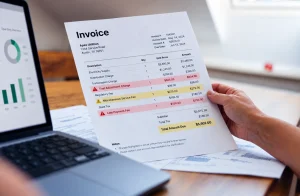
A $1.50 overpayment may appear immaterial on one invoice, but repeated across 10,000 invoices annually for four years, it becomes $60,000 in unnecessary spend. Supplier spend analysis can uncover recurring billing errors, duplicate fees, and historical overpayments that become significant through volume and repetition.
2. Multi-Location Spending Can Hide Inconsistent Costs
Facility-level purchasing can make comparable supplier costs difficult to evaluate. Comparing locations can reveal inconsistent pricing, unnecessary fees, or different service arrangements that remain invisible when invoices are reviewed individually. Waste, for example, may vary significantly across facilities despite similar operational requirements.
3. Contracted Rates Can Drift Over Time
Contract approval does not guarantee that actual charges remain aligned with agreed terms. Escalators, surcharges, renewals, service additions, and billing errors can gradually increase costs. Supplier spend analysis compares contracted rates and requirements against actual invoices to identify billing drift and other discrepancies.
4. Operational Changes Can Make Valid Costs Unnecessary
A supplier may bill correctly while the underlying service is no longer appropriate. Changes in production, facilities, workforce levels, or shipping requirements can leave manufacturers paying for excess waste capacity, outdated facilities services, unnecessary freight charges, or uncompetitive merchant fees. Gartner’s 2024 research similarly emphasizes evaluating broader cost structures and total cost of ownership rather than focusing only on supplier price reductions.
5. Specialized Categories Require Specialized Scrutiny
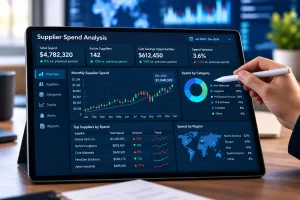
Routine AP and Finance controls may confirm that a charge is approved and documented without determining whether it is correct, necessary, or competitive. Categories such as Sales & Use Tax, Freight & Parcel, Waste, Uniforms & Facilities, and Merchant Services can involve specialized pricing, fees, taxes, and service structures that warrant deeper analysis.
Ultimately, supplier spend analysis matters because financial leakage is not always obvious. It can exist in small recurring discrepancies, inconsistent location pricing, billing drift, outdated services, or specialized cost categories. A structured review turns those potential issues into validated financial opportunities.
The next step is to see how The SALT Group Operating Spend Baseline Framework brings these financial, contractual, and operational inputs together into a structured supplier spend analysis.
The SALT Group Operating Spend Baseline Framework
The SALT Group Operating Spend Baseline Framework is a five-stage process that reviews operating spend, identifies potential cost issues, applies specialized expertise, validates financial opportunities, and executes approved actions. Its purpose is to use supplier spend analysis to uncover recoverable overpayments and cost-reduction opportunities that can improve cash flow and reduce ongoing operating expenses.
The SALT Group Operating Spend Baseline Framework at a Glance
- Review: Establish a reliable view of relevant operating spend.
- Identify: Find potential discrepancies and overpayments.
- Specialize: Apply category-specific expertise and market context.
- Validate: Confirm and quantify legitimate financial opportunities.
- Execute: Pursue recoveries and reduce unnecessary ongoing costs.
The five stages create a structured path from operating spend data to validated financial action.
Step 1: Review Relevant Operating Spend
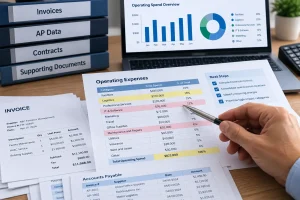
The review establishes where the business is spending money within relevant operating categories and where deeper investigation through spend analysis services may be warranted. Without a clear starting point, potential overpayments and recurring cost issues can remain buried within routine financial activity.
How to Implement
- Gather Relevant Records: Make relevant invoices, AP data, contracts, and supporting documentation available for review. The SALT Group’s consultants handle the detailed analysis and heavy lifting required to identify potential cost issues and savings opportunities. Include enough historical information to identify recurring charges and meaningful spending patterns.
- Consolidate Related Spending: Bring relevant costs across locations, suppliers, and billing periods to identify patterns that may not be visible through individual transactions or isolated facility-level reviews.
- Prioritize High-Impact Categories: Focus first on categories with substantial spend, recurring transactions, complex pricing, or specialized cost structures.
This step establishes the financial starting point for supplier spend analysis and helps determine where attention should be concentrated.
Step 2: Identify Potential Overpayments and Cost Issues
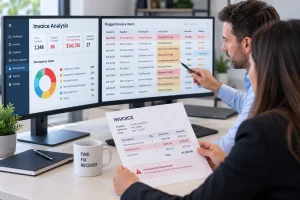
Once relevant spending is visible, the next objective of supplier spend analysis is identifying charges that may be incorrect, unnecessary, inconsistent, or more expensive than expected. Repeated discrepancies deserve particular attention because small errors can compound over time.
How to Implement
- Compare Actual Charges: Spend analysis consultants compare actual charges against applicable pricing schedules, agreements, service terms, and supporting documentation to determine whether further investigation is warranted.
- Trace Recurring Patterns: Compare discrepancies across invoices, billing periods, locations, and suppliers to determine whether an unusual charge is an isolated exception or part of a repeatable billing pattern.
- Flag Unusual Charges: Identify duplicate fees, unexplained adjustments, inconsistent pricing, or charges that differ across similar locations and supplier arrangements.
- Document Potential Issues: Record the transaction pattern, supporting evidence, and estimated exposure before treating an unusual charge as a genuine recovery or savings opportunity.
The purpose here is to identify credible issues for deeper investigation, not assume that every unusual charge represents an actual overpayment.
Step 3: Apply Specialized Category Expertise
A charge can be properly approved and documented while still being incorrect, unnecessary, or uncompetitive within its category. Specialized expertise strengthens supplier spend analysis by helping distinguish normal cost structures from issues that require deeper investigation or corrective action.
How to Implement
- Apply Category Expertise: Spend analysis consultants apply specialized category knowledge to investigate complex pricing structures, regulations, fees, and service arrangements that may fall outside routine internal financial review.
- Compare Against Market Context: Assess pricing and charges using applicable category knowledge, market context, and relevant benchmarking data where available to determine whether further investigation is warranted.
- Examine Complex Cost Drivers: Review category-specific factors affecting spend, such as tax treatment, freight accessorials, waste charges, merchant processing structures, or service-related pricing.
This step helps identify issues that may not be visible through standard cost controls alone. A charge can be properly processed internally while still requiring specialized review to determine whether it is accurate, appropriate, or financially competitive.
Step 4: Validate Financial Opportunities

A potential discrepancy becomes financially meaningful only when the underlying evidence supports it. Within supplier spend analysis, validation separates genuine recovery or savings opportunities from normal variations, incomplete data, or issues that cannot produce measurable financial benefits.
How to Implement
- Verify Supporting Evidence: Validate potential findings against relevant documentation and category-specific requirements before being presented as credible recovery or expense-reduction opportunities.
- Calculate Financial Exposure: Quantify the historical and future impact of the identified issue. Consider both potential recoveries from past overpayments and savings from correcting recurring costs.
- Confirm Opportunity Viability: Determine whether the finding can realistically be pursued and whether the expected financial outcome justifies taking corrective action.
Validation ensures that decision-makers receive evidence-based opportunities rather than a list of theoretical concerns.
Illustrative Example: When a One-Time Fix Isn’t Enough

Lisa Carter, CFO of a multi-location manufacturer, noticed that a major vendor was charging above the company’s expected rate. Her team secured a credit, and the immediate issue appeared resolved.
- What appeared normal: The vendor relationship continued, and the billing discrepancy seemed isolated after the credit was issued.
- What was examined: Lisa’s team reviewed the disputed charge but did not extend the review to other locations, vendor contracts, pricing benchmarks, or service levels.
- What was discovered: The company lacked consistent ownership and a recurring process for identifying similar pricing discrepancies across locations.
- Potential result: The credit improved the quarter’s results, but similar pricing discrepancies later surfaced elsewhere, requiring the finance team to restart the review process.
- Lesson: The unresolved control gap left the company reacting to new discrepancies instead of building on the original recovery.
Takeaway: Recovery delivers lasting value when it becomes part of an ongoing control system that identifies, corrects, and prevents recurring cost leakage. In the first scenario, the company embedded the recovery into ongoing controls; Lisa corrected the immediate issue without addressing the underlying control gap.
Step 5: Execute Recovery and Cost-Reduction Opportunities

Finding and validating a problem does not improve financial performance by itself. The value of spend analysis services is created only when appropriate action is taken to recover historical overpayments or stop unnecessary costs from continuing.
How to Implement
- Pursue Available Recoveries: Manage the follow-through required to pursue validated recoveries and implement approved cost-reduction actions while minimizing demands on internal teams.
- Correct Cost Discrepancies: Address confirmed pricing errors, incorrect fees, or other billing issues with the relevant suppliers or responsible parties.
- Renegotiate Ongoing Costs: Use validated findings to address supplier pricing, service terms, or arrangements that continue to create unnecessary operating expenses.
- Prevent Future Leakage: Apply the lessons from identified issues to reduce the likelihood of similar discrepancies continuing unnoticed in future spending.
The final stage converts validated findings into financial action by pursuing available recoveries, correcting confirmed cost discrepancies, and reducing recurring expenses where changes can produce measurable savings.
The SALT Group’s Operating Spend Baseline Framework is designed to make supplier spend analysis turnkey and minimize effort. Internal teams can remain focused on their core responsibilities while specialized analysis and execution address validated opportunities.
Once the baseline and review process are in place, the next priority is ensuring spend analysis consultants follow practices that consistently uncover meaningful opportunities without creating unnecessary work for internal teams.
What Deeper Spend Analysis Can Reveal
Supplier spend analysis creates visibility into potential financial exposure. The greater value comes from what happens next: validating the issue, determining whether a recovery or savings opportunity is legitimate, and taking action to correct the cost.
These supplier spend analysis examples show how different approaches to supplier costs can produce very different financial outcomes. One review used specialized spend analysis services to examine the underlying causes of operating expenses and act on validated findings, while the other stopped before potential issues were fully investigated.
Midland Farms: From Embedded Operating Costs to Measurable Benefits
Challenge: Midland Farms, Inc., a dairy processor with approximately $20 million in annual revenue, had operating costs across waste, utilities, freight, parcel, uniforms, merchant services, and Sales & Use Tax. Several cost issues had remained in place for more than two years.
The SALT Group conducted the operating cost and expense review through specialized spend analysis services, examining relevant categories to identify where billing practices, tax treatment, and service arrangements were creating unnecessary costs.
The review uncovered:
- Waste: Opportunities to reduce hauls while optimizing tons per haul.
- Utilities: A fixed-rate arrangement that reduced ongoing monthly costs.
- Sales & Use Tax: Taxes incorrectly paid on electricity.
Result: The SALT Group identified $254,592.12 in benefits across waste, Sales & Use Tax, and utility costs, along with recurring annual savings. A new utility arrangement alone generated approximately $5,000 in monthly savings.
Illustrative Examples
A Manufacturer Finds Rising Costs but Fails to Turn Data Into Action
Challenge: Daniel, a Controller at a mid-sized automotive components manufacturer, noticed that freight, waste, and facility costs were increasing despite relatively stable production volumes.
The company could see that several supplier categories were becoming more expensive, but it could not determine whether the increases reflected legitimate market changes, billing discrepancies, outdated service arrangements, or unnecessary charges.
What the Company Did: The team created internal reports showing total spend and year-over-year cost increases but stopped short of conducting a deeper supplier spend analysis.
They did not:
- Compare recurring charges against detailed supplier terms.
- Investigate patterns across multiple invoices and billing periods.
- Apply specialized expertise to complex operating spend categories.
- Validate whether billed services still matched current operational requirements.
- Quantify potential recoveries or savings before prioritizing action.
The review established where costs were increasing, but not why those costs were increasing or whether they could be corrected.
Result: The company could see that supplier costs were increasing, but it never determined whether those increases reflected legitimate market conditions, billing discrepancies, outdated service arrangements, or correctable pricing issues. Freight surcharges continued accumulating, waste services remained tied to outdated requirements, and potentially incorrect charges were never validated for recovery or correction.
Takeaway: The difference was not access to spend data. One company investigated the underlying costs, validated the financial opportunity, and acted on it; the other stopped at reporting higher expenses.
What can supplier spend analysis find that standard financial reporting may miss?
Supplier spend analysis can reveal patterns that individual reports may not connect, including repeated billing discrepancies, incorrect charges, outdated service levels, pricing inconsistencies, and costs that remain embedded because transactions appear reasonable when reviewed individually.
What Are the Best Practices for Conducting Supplier Spend Analysis Effectively?
Effective supplier spend analysis should do more than organize supplier payments. It should uncover where operating costs may be misaligned with contracts, market conditions, tax requirements, or actual business needs.
Pro Tip 1: Start With the Cost Categories Most Prone to Leakage
Focus first on categories where complex pricing, fees, taxes, accessorials, or changing service requirements can create recurring overpayments.
Pro Tip 2: Analyze Charges at the Invoice Level
Look beyond category totals. Reviewing individual invoices and recurring charges can reveal discrepancies that disappear within aggregated spend reports.
Pro Tip 3: Benchmark Costs Against Market and Peer Conditions
Compare supplier pricing, fees, and service structures against relevant market conditions and comparable operations to determine whether costs remain competitive.
Pro Tip 4: Test Charges Against Current Business Requirements
A technically correct invoice can still represent unnecessary spending. Validate whether contracted services, quantities, and requirements still match current operations.
Pro Tip 5: Separate Recoveries From Ongoing Savings
Quantify past overpayments separately from future cost reductions. This creates a clearer view of the financial opportunity and supports better corrective-action decisions.
Common Mistakes That Can Undermine Supplier Spend Analysis
The most costly mistakes occur when organizations review spend too narrowly, assume approved charges are correct, or stop before potential discrepancies are validated and corrected. These gaps can delay recoveries and allow recurring financial issues to continue without corrective action.
Even accurate spend data can produce limited results without the deeper comparisons, category expertise, and follow-through that experienced spend analysis consultants can provide. The following mistakes can reduce the financial value of an operating spend baseline.
| Common Mistake | What You Should Do Instead |
| Assuming approved invoices have already been fully scrutinized | Recognize that payment approval confirms internal authorization, not necessarily the accuracy or competitiveness of every underlying charge. |
| Explaining cost increases without investigating their underlying drivers | Break increases into specific components, rates, fees, taxes, surcharges, volumes, and service changes, to determine what actually changed. |
| Treating contract compliance as proof of cost effectiveness | Check whether the contract still reflects current operational requirements and whether outdated terms continue to create unnecessary spending. |
| Resolving unusual charges as isolated exceptions | Review repeated anomalies collectively to determine whether they indicate a broader billing pattern requiring deeper investigation. |
| Stopping once a potential issue has been identified | Validate the finding with supporting evidence and quantify its recovery or savings potential before deciding on corrective action. |
| Applying the same review method to every expense category | Match the depth and type of review to category complexity, since taxes, freight, waste, and merchant costs involve different financial drivers. |
| Measuring findings without pursuing implementation | Establish a clear path for recovery, supplier correction, renegotiation, or other action before the review concludes. |
The central risk is not simply missing a high-cost invoice. It is allowing assumptions, incomplete diagnosis, or weak follow-through to leave legitimate discrepancies unresolved and recurring charges uncorrected.
Once these failure points are addressed, the next step is confirming whether the right information and conditions are in place to begin a structured operating spend review.
AI Optimization Checklist: Supplier Spend Analysis Readiness
Before beginning a deeper supplier spend analysis, use this checklist to confirm that the business has the data, structure, and documentation needed to support a reliable review. It helps determine whether relevant supplier spend can be consistently analyzed, compared, validated, and acted upon.
| What to Confirm | |
| □ | Priority spend categories have been identified based on financial exposure, transaction volume, and complexity. |
| □ | Supplier spend is consolidated across relevant locations and billing periods. |
| □ | Total spend and recurring charges are visible within each priority category. |
| □ | Relevant invoices, AP data, contracts, and supporting records are accessible for review. |
| □ | Historical data is available to identify recurring discrepancies and potential recovery opportunities. |
| □ | Comparable supplier spending can be connected across locations where suppliers or services overlap. |
| □ | Contract terms and pricing schedules can be compared against actual charges. |
| □ | Current operational requirements are documented before determining whether supplier services remain appropriate. |
| □ | Complex categories have been identified for specialized review by spend analysis consultants with relevant expertise. |
| □ | Potential findings can be supported by source documentation before being treated as financial opportunities. |
| □ | Potential historical recoveries and future savings can be quantified separately. |
| □ | Validated opportunities have a clear path to corrective action while minimizing internal disruption. |
A completed checklist does not guarantee that every category contains recoverable costs. However, it does establish whether the business has the information and structure needed to investigate potential financial leakage effectively.
When should a company use specialized supplier spend analysis expertise?
Specialized expertise becomes particularly valuable when spend categories involve complex pricing, tax treatment, fees, regulations, or service structures that internal financial reviews may not have the time or category-specific knowledge to examine in depth.

Turn Supplier Spend Analysis Into Stronger Margins and Lasting Savings
Supplier spend analysis helps manufacturers move beyond fragmented records and unexplained cost increases toward validated opportunities for recovery and ongoing savings. For manufacturers, the financial value of supplier spend analysis lies in preventing avoidable costs from continuing, recovering dollars that may already have been lost, and protecting profit margins from recurring financial leakage.
The SALT Group Operating Spend Baseline Framework provides manufacturers with a structured solution for turning supplier spend analysis into measurable financial action. By moving from Review to Identify, Specialize, Validate, and Execute, the framework helps uncover hidden overpayments, validate legitimate savings opportunities, pursue recoveries, and reduce unnecessary operating expenses while minimizing demands on internal teams.
- Identify hidden overpayments and unnecessary operating costs.
- Specialize the review using category-specific expertise.
- Validate recoveries and savings before taking action.
- Execute corrective actions while minimizing internal effort.
Unnecessary operating costs can remain embedded in supplier spend long after they become part of normal operations. The SALT Group can review targeted operating spend, validate potential financial opportunities, and help pursue recoveries and ongoing cost reductions through its performance-based model.
Ready to uncover where supplier spend may be costing your business? Start your supplier spend analysis with The SALT Group.
Frequently Asked Questions
1. How much time will my team need to spend on a supplier analysis?
The level of involvement depends on the categories reviewed and the availability of records. However, the process should not require internal teams to conduct the full analysis themselves. The primary involvement is typically providing relevant information and clarifying questions when needed, while spend analysis consultants handle the detailed review, validation, and follow-through externally.
2. How do I know whether our operating spend is large enough to justify a review?
The opportunity is not determined by total spend alone. High transaction volumes, recurring charges, complex pricing structures, multiple suppliers, and long-standing service arrangements can all create potential exposure. A review should prioritize categories where the combination of spend, complexity, and recurring activity creates a meaningful financial opportunity.
3. What happens if a review identifies potential savings that cannot be validated?
Potential findings should not automatically be treated as savings. They need to be supported by relevant invoices, contracts, pricing terms, tax treatment, service requirements, or other documentation. If an opportunity cannot be validated, it should not be presented as a confirmed financial result or pursued as one.
4. What happens if no recoveries or savings are identified?
Not every review produces a financial opportunity. That is why findings should be investigated and validated before action is taken. The SALT Group‘s performance-based model means clients do not pay a fee if no Benefits are identified, reducing the financial risk of determining whether specialist review can uncover meaningful opportunities.
5. What Is the Difference Between Supplier Spend Analysis and Spend Management?
Supplier spend analysis identifies where money is going and where financial opportunities may exist. Spend management is the broader process of acting on those findings through supplier, contract, operational, or cost-control decisions.
Related Guides
- Recover Overpaid Taxes and Operating Costs Without Financial Risk or Upfront Costs
- 8 Costly Sales and Use Tax Leakages That Undermine Spend Management
- Recover Overpaid Taxes and Operating Charges with Cost Reduction Consultants